
When a sudden, sharp pain shoots through your tooth or an accident leaves you with a chipped smile, finding an emergency dentist in North Glendale, AZ, is all you can think about. Acting fast can mean the difference between saving a tooth and losing it.
Your First Steps in a Dental Emergency
A dental emergency is always a shock. But if you stay calm and know what to do, you can make a big difference. Whether you have a bad toothache or a tooth that's been knocked out, what you do right away matters. The goals are simple: control the pain, protect the tooth from more damage, and call a professional.
These things happen more often than you might think. In the North Glendale area, about one in every ten adults has a dental emergency each year. Many of these emergencies are from accidents. This shows that knowing some basic dental first aid is a very useful skill.
Handling a Knocked-Out Tooth
If a tooth gets knocked out, you need to act quickly.
First, find the tooth. Be careful to only touch the crown (the chewing part), not the root. Gently rinse off any dirt with milk or a little water. Do not scrub it or use soap. If you can, try to gently put it back into the socket. Hold it in place by biting down on a clean piece of gauze or cloth.
If you can't get it back in, don't force it. Instead, put the tooth in a small container of milk or your own saliva. This is very important to keep the root cells alive. It gives us the best chance to put the tooth back in successfully. Do not store it in plain water.
The most important thing for saving a knocked-out tooth is getting to an emergency dentist within one hour. Acting fast helps save the root cells needed to reattach the tooth.
Managing a Broken or Chipped Tooth
For a broken or chipped tooth, first rinse your mouth with warm salt water. This will clean the area and calm your gums. If you see any swelling, a cold pack on the outside of your cheek will help.
Be sure to find any pieces of the broken tooth and bring them with you to your appointment. For more details, check out our guide on what to do for a broken tooth.
The table below is a quick guide for some of the most common emergencies.
Quick Guide for Common Dental Emergencies
This table gives a short summary of what to do—and what not to do—for common dental problems while you're on your way to see us.
| Emergency Situation | What You Should Do Immediately | What to Avoid |
|---|---|---|
| Knocked-Out Tooth | Handle by the crown only. Rinse gently with milk. Try to put it back in or store it in milk. Call your dentist right away. | Scrubbing the root. Storing the tooth in water. Waiting to get help. |
| Broken or Chipped Tooth | Rinse mouth with warm salt water. Use a cold pack for swelling. Save any broken pieces. | Putting pain killers right on the gums. Chewing on that side of your mouth. |
| Severe Toothache | Rinse with warm water. Gently floss to remove any stuck food. Take pain medicine you can buy at a store. | Placing aspirin right on the tooth or gums. Ignoring pain that doesn't go away. |
| Abscess or Infection | Rinse with salt water many times a day. See a dentist right away; this is a serious problem. | Trying to pop the abscess yourself. Waiting to get treatment, as the infection can spread. |
Remember, these are temporary steps to manage the problem until you can get professional help. What you do at home is the first important step toward getting better.
This picture shows three simple, important steps: first, manage your pain; next, do what you can to save the tooth; and last, call your dentist right away.
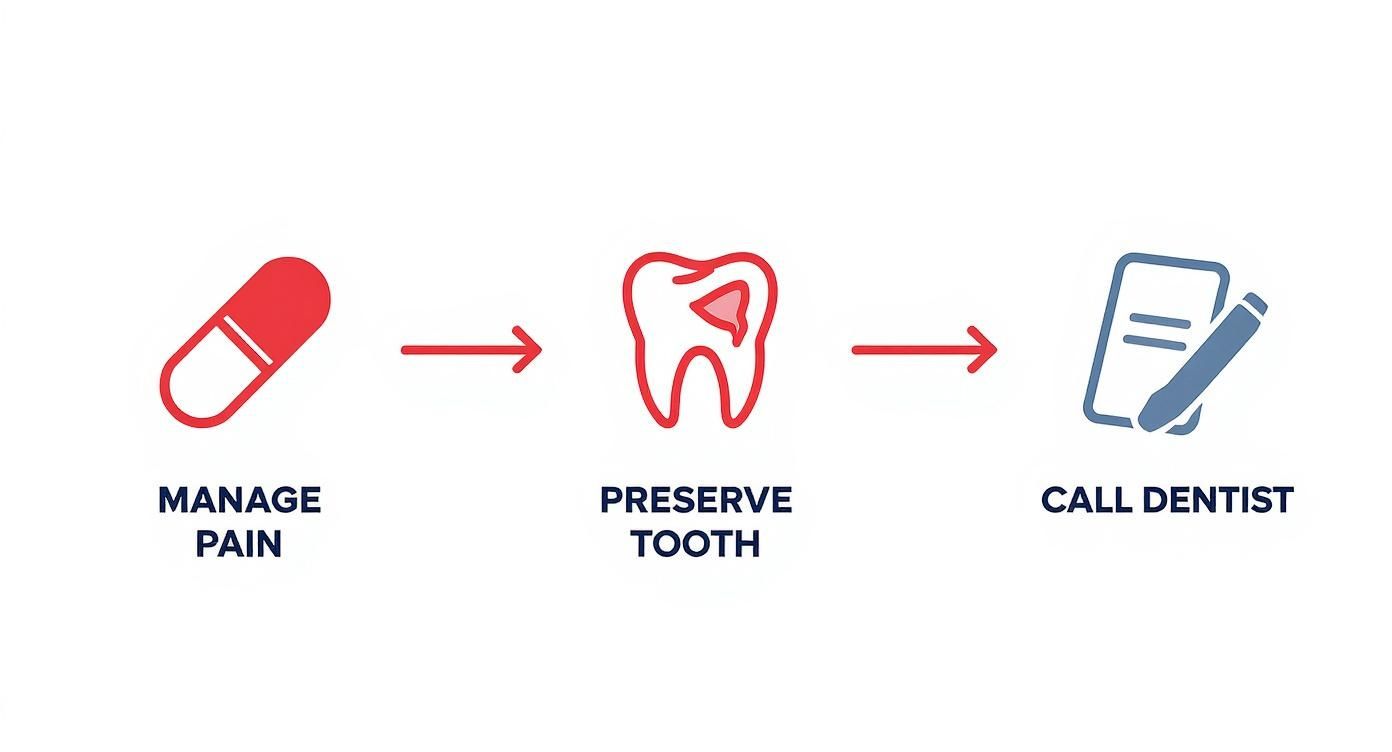
Following these steps helps make sure that what you do at home leads to a good treatment and a healthy smile.
Deciding Between the ER and an Emergency Dentist
When you're in a lot of pain, it’s hard to think clearly about where to go for help. Should you rush to the nearest hospital emergency room, or should you search for an "emergency dentist north glendale az"? Making the right choice gets you the proper care faster and can save you time and money.
Hospital ERs are great for big medical problems, but they almost never have dentists. They can give you something for the pain and maybe medicine for an infection, but they can't fix the dental problem. They can't do a root canal or put a knocked-out tooth back. You will likely be sent to a dentist anyway, but only after a long wait and a big hospital bill.
When the Hospital ER Is Necessary
There are a few clear signs that a dental problem has turned into a serious medical danger. In these cases, you need to go straight to the hospital.
You should go to the ER if you have any of these problems:
- Bleeding That Won't Stop: If you're bleeding from the mouth and it won't stop after 10-15 minutes of firm pressure.
- Trouble Breathing or Swallowing: Swelling from a dental infection that spreads to your neck or face can block your airway. This is a real emergency.
- A Possible Broken Jaw: If you’ve been hit in the face and think your jaw might be broken, the ER is the only place that can handle it.
- A High Fever with a Toothache: This can be a sign that a dental infection has spread through your body and needs medical care right away.
These are true medical emergencies that need a hospital. For almost everything else related to your teeth and gums, an emergency dentist is who you need to see.
When to Call Your Emergency Dentist
An emergency dentist is trained and has the right tools to handle urgent dental problems. We focus on treating the cause of your pain and saving your tooth, not just hiding the symptoms.
Think of it this way: An ER doctor can put a bandage on a deep cut, but a surgeon is needed to stitch it up right. Your emergency dentist is the specialist who can fix the dental problem.
You should call an emergency dentist for issues like:
- A very bad toothache that keeps you from sleeping.
- A tooth that's been knocked out or loosened.
- A cracked, chipped, or badly broken tooth.
- A lost filling or crown that has left the inside of the tooth open.
- A painful sore or swelling on your gum line.
These problems need a dentist's help right away to get you out of pain and give you the best chance of saving your tooth. If you have a problem over the weekend, our team made a helpful dental emergency weekend survival guide with useful tips.
Finding the Right Emergency Dentist in North Glendale AZ
When a dental emergency happens, you don't want to be searching for a clinic that’s open and can see you right away. The stress is already high. Knowing what to look for before you’re in pain can make a big difference.
Your main goal is to find a professional who can see you quickly, find out what’s wrong, and make you feel better.
The need for quick care has made many local dental offices change. Many dental emergencies happen after regular business hours. This has forced dentists to offer more open schedules.
What Makes an Emergency Dentist Stand Out?
Not every dental office is ready to handle urgent problems well. To make sure you’re getting the best care when you need it fast, look for a few specific things.
A great emergency dentist should offer:
- Same-Day Appointments: The clinic needs to have time set aside each day just for emergencies. You shouldn't have to wait days to be seen when you're in pain.
- Longer Hours: Dental problems don't only happen from 9-to-5. A dentist with evening or weekend hours is a big help.
- A Direct Emergency Line: You need a phone number where a real person can give you advice and schedule you an appointment.
When you call, don’t be afraid to ask questions. A good team will be happy to explain things. Ask them, "How soon can you see me?" and "What is your experience with a [knocked-out tooth, bad infection, etc.]?" Their answers will help you trust them.
For dentists trying to reach patients in need, being easy to find online is important. Using specialized SEO strategies for dentists helps make sure that when you search for help, the best clinics show up first.
Questions to Ask Before You Head In
Once you have a clinic on the phone, a few quick questions can tell you if they’re the right choice. This helps you check how ready they are before you even go in.
Make sure to ask these important questions:
- What kind of tools do you use to find the problem? Ask if they have digital X-rays or 3D imaging. These tools give a much clearer picture of the problem and lead to a faster, better diagnosis.
- What are my payment options? Get a clear idea of the costs. Ask what insurance they take, if they have payment plans, or if there are any membership plans that could help.
- Is your office easy for me to get to? When you’re in pain, a short drive is important. If you’re in the area, finding a dentist near Arrowhead Lakes in North Glendale can mean less travel time and faster relief.
Choosing the right emergency dentist in North Glendale means you can focus on what matters: getting the help you need from a team you can trust.
What to Expect at Your Emergency Dental Visit
Going to a dental office for an emergency is not fun. We understand. You're stressed, you're in pain, and you don't need more things to worry about. That’s why we want to tell you what happens when you call us, so you can feel more in control.
When you call, our team’s first job is to listen. We’ll ask a few questions to understand what’s going on. We will also give you helpful advice to manage the pain and protect your tooth before you even get to our North Glendale office.
The First Steps: Check-Up and Pain Relief
When you arrive, our top goal is to get you out of pain quickly. After you check in, we’ll get you into an exam room to see what’s wrong.
The process starts with a look at the problem area. But the real problem is often hidden, which is why we’ll take digital X-rays. This is a very important step. It’s the only way for us to see the tooth’s root, the bone around it, and any signs of infection you can't see with your eyes.
An emergency visit has two main goals. First, we need to stop your pain and make the situation stable. Second, we have to find the real cause of the problem so we can make a plan to fix it for good.
We also know that feeling nervous at the dentist is real, and it’s often worse during an emergency. If you're feeling anxious, please let us know. We have ways to help you feel calm. You can learn about the types of dental sedation we offer to make your visit as easy as possible.
Building Your Treatment Plan
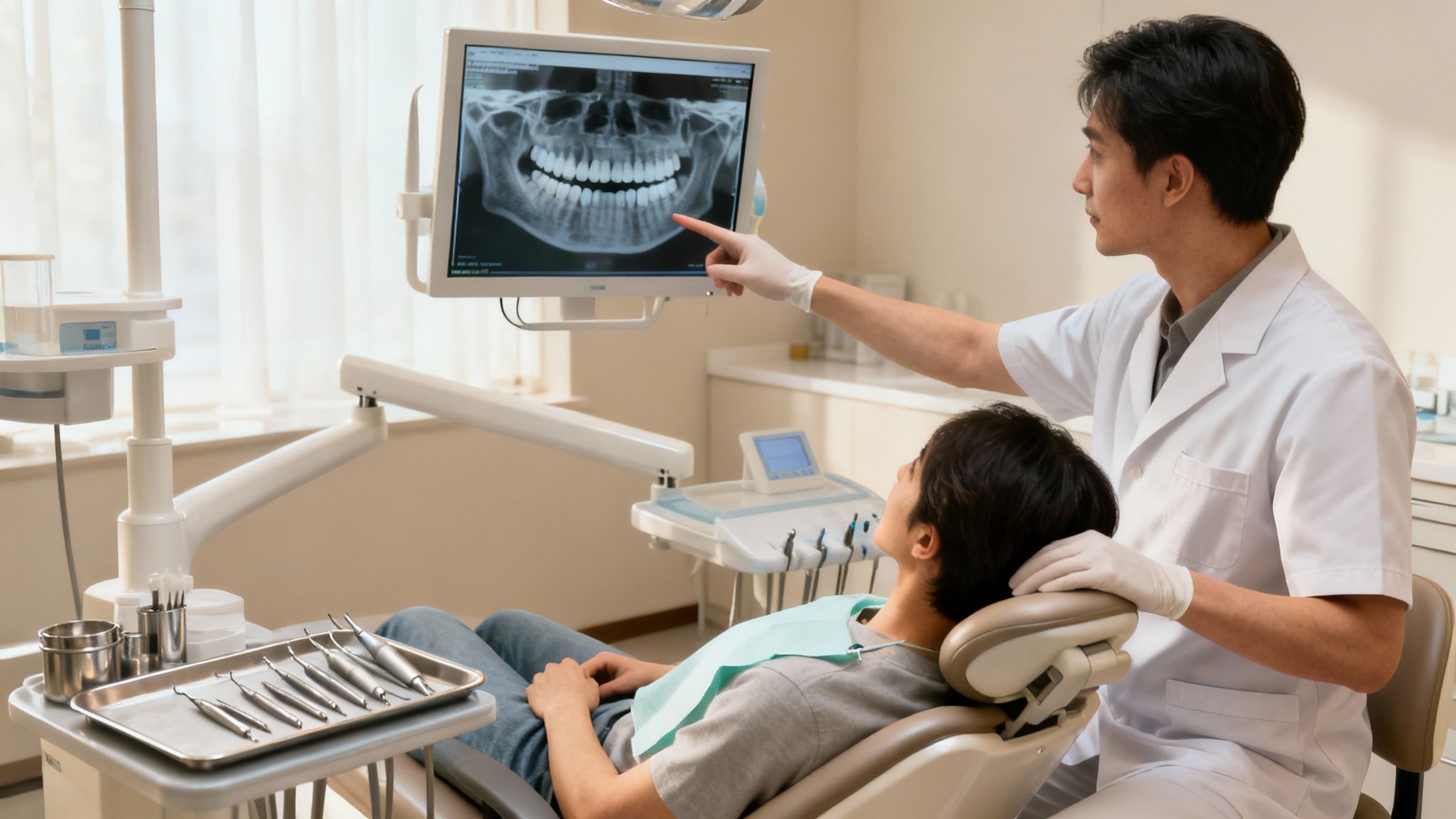
With the exam and X-rays done, your dentist will know what's wrong. We’ll sit down with you and explain everything in simple words. We’ll even show you your X-rays on the screen and point out exactly what we see.
Then, we’ll talk about your options. Depending on the problem, we might be able to fix it right away. For bigger issues, our goal might be to stop the pain now and have you come back for another visit for a root canal or a crown.
Here’s what we will talk about:
- The Diagnosis: Exactly what’s causing your pain.
- Your Treatment Choices: The different ways we can fix it.
- The Timeline: What we can do today and what needs another appointment.
- A Cost Breakdown: A clear estimate of the cost so you know what to expect.
We’ll work with you to choose the best plan, making sure you feel good about the decision. As your emergency dentist in North Glendale, AZ, we want to give you a lasting solution for your dental health, not just a quick fix.
Managing the Cost of Urgent Dental Care
A dental emergency is stressful enough without worrying about the bill. The fear of cost should never stop you from getting the care you need to stop the pain and protect your health.
The good news is there are many ways to pay for an emergency dentist in North Glendale, AZ, with or without insurance. Taking a minute to understand your options can remove a lot of stress.
Using Dental Insurance for Emergencies
If you have dental insurance, your first step should be to find out how your plan covers emergencies. Coverage can be very different from plan to plan. A quick call to your insurance company or our office is a great idea.
When you call, have a few questions ready:
- Does my plan cover emergency dental visits?
- Is Beyond Dental Care in my network?
- Do I have to pay a certain amount (a deductible) first?
- Do I need to get approval for treatments like a tooth removal or root canal?
Getting these answers early helps you avoid surprises later. Our team is great at helping you with this and can often get the information you need quickly.
Options for Patients Without Insurance
Many people don't have dental insurance, and that's okay. We believe that money should not stop you from getting needed medical care. That’s why we offer other options to make your treatment affordable.
Your health is always the most important thing. A good dental team will focus on getting you out of pain first and will work with you on the payment details later.
We have a couple of great payment options. One is in-house financing, which lets you break down the total cost into smaller monthly payments. Another choice is a dental membership plan. This plan gives you discounts on our services for a yearly fee, with no deductibles or waiting.
To learn more about how these programs work, you can read our guide on making premium dentistry accessible for everyone. These plans are a simple and affordable choice instead of normal insurance. They help you get care right away without the money worries.
Aftercare and Preventing Future Dental Emergencies
Once your dental emergency is fixed, the focus turns to two things: healing well and making sure it doesn't happen again. Taking care of yourself after treatment is usually simple, but it's very important for a quick recovery. We’ll always give you instructions for your specific treatment, but a few general rules are a great place to start.
For the first few days, you'll want to eat soft foods to avoid pressure on the treated tooth. Think about eating yogurt, smoothies, soups, and mashed potatoes. Keeping the area clean is also key, but you have to be gentle. Rinsing with warm salt water a few times a day is perfect for reducing swelling and keeping germs away.
Building Healthier Habits for a Stronger Smile
Preventing the next problem is just as important as treating the current one. Many dental emergencies are not just random accidents. They often happen because of bad habits or not getting dental care sooner. Taking a few simple steps now can save you a lot of pain and money later.
For example, if you or your kids play sports like football, hockey, or basketball, a custom-fitted mouthguard is a must. Many dental injuries happen during sports. A good mouthguard can take the force of a hit and protect your teeth from getting chipped, broken, or knocked out.
The best way to stop a dental emergency is to be prepared. Small, regular actions like wearing a mouthguard and seeing your dentist are the best ways to protect your smile.
It’s also smart to stop any habits that put stress on your teeth. We see this all the time—chewing on ice, hard candy, or pen caps. These things can make tiny cracks in your teeth. Over time, these cracks can weaken your teeth and lead to a sudden, painful break.
The Role of Regular Dental Checkups
Finally, one of the best ways to stop a dental disaster is by having regular checkups. These appointments are your best defense. They let your dentist find small issues—like a tiny cavity or a weak filling—long before they turn into a bad toothache in the middle of the night.
Think of your dentist as a partner in your long-term oral health. By catching problems when they're small, we can suggest simple, easier, and cheaper treatments. This proactive approach is the key to avoiding the need for an emergency dentist in North Glendale, AZ, and keeping a healthy, pain-free smile for years.
Answering Your Emergency Dentistry Questions
When you're having a dental emergency, you need clear answers. Here are some of the most common questions we hear from our North Glendale patients when they have an urgent dental problem.
Does a Bad Toothache Count as an Emergency?
This is probably the top question we get. The answer depends on the kind of pain you have and any other symptoms you might have.
If the pain is very bad, throbbing, and keeps you up at night, it's an emergency. It's also an emergency if you notice any swelling in your face, jaw, or gums. Those are clear signs of a serious infection that needs to be treated right away.
On the other hand, if the pain is a mild ache that you only feel when you drink something hot or cold, it might be a smaller issue like a cavity. You should still call us to get it checked, but it likely won't need a same-day emergency visit.
Can You Pull My Tooth at an Emergency Visit?
Many patients in a lot of pain just want the problem gone. They ask if we can pull the tooth during their first appointment. Sometimes, the answer is yes. If a tooth is badly infected, broken, or causing too much pain, pulling it might be the fastest way to make you feel better.
But our first goal is always to save your natural tooth if we can. We'll start with an exam and X-rays to get a full picture of the problem. After we look at the results with you, we'll talk about the options. We will decide together if pulling the tooth is the best choice or if another treatment, like a root canal, is better for your long-term health.
A dental emergency with a child can be very stressful for a parent. If your child chips, breaks, or knocks out a tooth, stay calm. Find the tooth or any large pieces, have your child gently rinse their mouth with warm water, and call your emergency dentist in North Glendale, AZ, right away.
Getting answers to these common questions can help turn a moment of panic into a clear plan.
Don't let a dental emergency take over your life. For fast, kind, and expert care, you can trust Beyond Dental Care. We are here to provide the relief you need, exactly when you need it. Contact us now to schedule an emergency appointment.