
When people ask if veneers are permanent, they usually want to know if it's a one-time fix. The short answer is no, but it is a long-term commitment to your smile that can't be reversed.
Think of veneers like a custom roof on a house. It's built to last for many years, but even the best roof will need to be replaced someday.
Are Veneers a Lifelong Solution?
The idea of a “permanent” cosmetic treatment can be confusing. While dental veneers are made to be very strong, they are not indestructible.
For traditional veneers, your dentist has to remove a tiny layer of your natural tooth enamel. This step makes sure the veneer fits perfectly and looks natural. But it also means the process cannot be undone. Once your teeth are prepared for veneers, they will always need to be covered by something.
According to Dr. Dariene Lazore, a cosmetic dentistry expert, how long veneers last depends on the material used and how well you care for them. With good care, high-quality porcelain veneers often last 15 to 20 years, and sometimes even longer.
It’s also good to remember that our dental health needs change as we get older, which can affect how we care for veneers. This is one of many reasons why more adults are choosing veneers and aligners.
Debunking Common Myths About Veneers
One of the biggest myths is that veneers are unbreakable. This is not true. While they are strong and resist stains, they can still chip or crack under pressure—just like your real teeth.
Here are a few common myths and the evidence-based truth:
- Myth #1: Veneers are indestructible.
- Truth: Habits like chewing ice, biting your nails, or using your teeth to open packages can damage them. They are tough, but you still need to be careful.
- Myth #2: Veneers don't last very long.
- Truth: Clinical studies show that porcelain veneers are very reliable. Research shows that about 85-90% of them last for 7 to 10 years. Another study found an 88% success rate for traditional veneers after nine years. This proves they are a durable, long-term solution when cared for properly.
- Myth #3: Getting veneers will ruin my natural teeth.
- Truth: Modern dentistry focuses on saving as much of your natural tooth as possible. Dentists like Dr. Lazore use techniques that only remove a very thin layer of enamel, sometimes less than the thickness of a contact lens. This keeps your natural tooth strong and healthy underneath.
“The success of veneers is a partnership between the dentist and the patient. We create a durable, beautiful restoration, but its longevity truly depends on consistent, gentle daily care at home.” – Dr. Dariene Lazore, DMD
To learn more about what to expect, this guide on how long veneers truly last breaks down all the key factors.
Porcelain vs. Composite: How Long Each Lasts
When you choose veneers, the material makes a big difference in how long they last. The two main types are porcelain and composite, and their clinical performance is quite different.
Porcelain veneers are like custom-made ceramic shells for your teeth. They are created in a dental lab and are very strong. They also have a natural, shiny look that matches real tooth enamel. Because they are not porous, porcelain veneers are great at resisting stains from coffee, tea, or red wine.
Composite veneers, on the other hand, are made from a tooth-colored resin that your dentist applies directly to your teeth in one visit. This is often a faster and less expensive option. However, the material is more porous and not as strong as porcelain, so it is more likely to stain or chip over time.
Real Insights from a Cosmetic Expert
Based on Dr. Lazore’s experience in cosmetic dentistry, porcelain veneers are the best choice for a long-lasting smile transformation.
"When a patient wants a smile that will look brilliant and stay strong for over a decade, porcelain is almost always the answer. Its resilience and color stability are simply unmatched in a clinical setting."
With proper care, porcelain veneers can last 15 years or even longer. They are strong enough to handle normal chewing and biting.
Composite veneers usually have a lifespan of about 5 to 7 years. They look great at first but may need more touch-ups. They are more likely to chip or stain, meaning you might need to visit the dentist more often for polishing or repairs.
This infographic shows the impressive survival rates of different veneer types based on clinical studies.
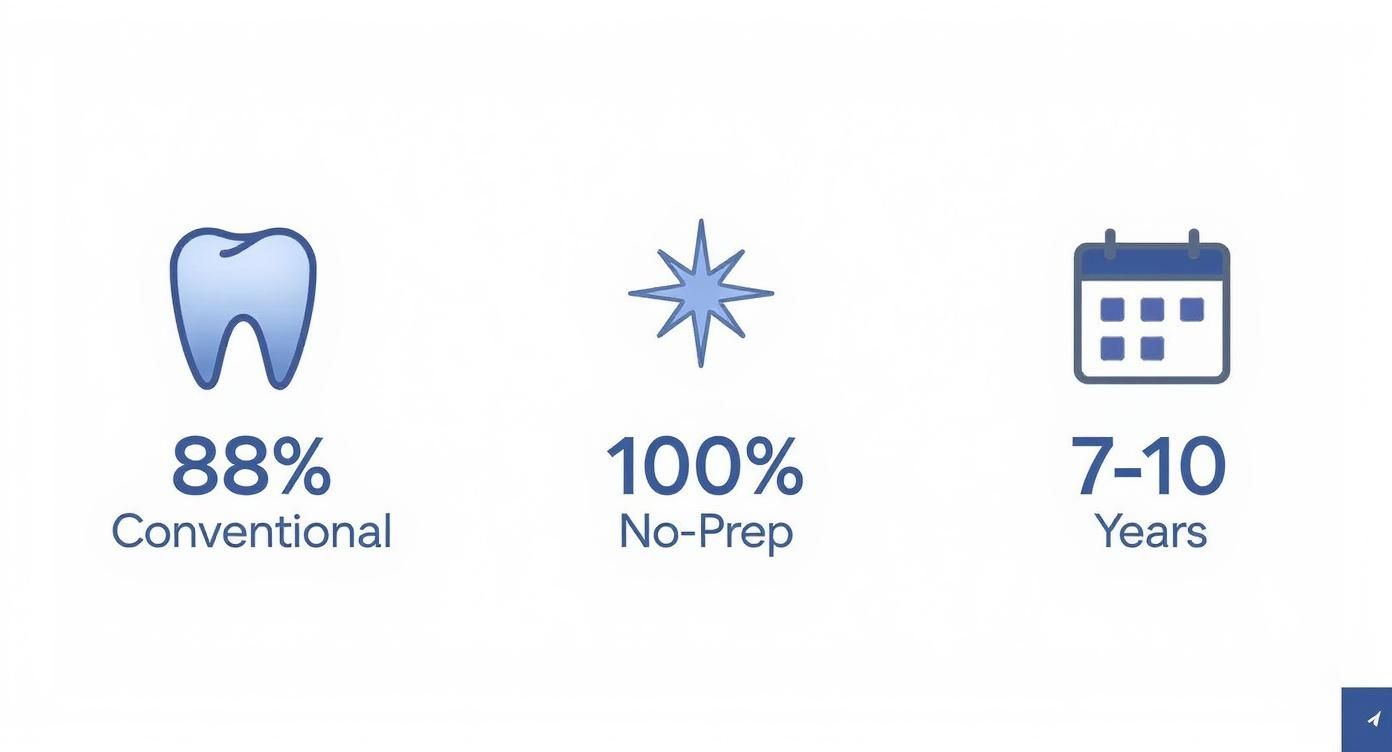
As you can see, veneers are a very successful and durable treatment that can last for many years.
A Quick Comparison for Your Smile Goals
Here is a simple chart to help you see the differences between the two materials.
Veneer Material Performance at a Glance
| Feature | Porcelain Veneers | Composite Veneers |
|---|---|---|
| Longevity | 15+ years is common with proper care. | Typically lasts 5-7 years before needing replacement. |
| Appearance | Superior, lifelike translucency that mimics natural enamel. | Can look very natural, but may appear more opaque. |
| Stain Resistance | Highly resistant to staining from coffee, wine, and tea. | Porous material that will stain over time, like natural teeth. |
| Durability | Extremely strong and resistant to chipping and fractures. | More prone to chipping and may require occasional repairs. |
| Cost | Higher initial investment. | More budget-friendly upfront. |
| Procedure Time | Requires at least two dental visits for creation and placement. | Can often be completed in a single visit. |
Choosing the right material depends on your budget, lifestyle, and your goals for your smile. Porcelain offers a more durable and stain-resistant solution, while composite is a faster, more affordable option.
What Really Determines How Long Veneers Last
The material you choose is important, but other factors also affect how long your veneers will last. The lifespan of your new smile is really a team effort between you and your dentist.
The skill of your cosmetic dentist is a huge factor. Placing veneers is a detailed process that requires careful work. Every step, from preparing the tooth to bonding the veneer, must be done perfectly to ensure a secure fit. A poorly bonded veneer is more likely to fail early.
The Foundation of a Lasting Bond
The health of your natural teeth is the foundation for your veneers. A veneer bonds best to healthy, strong tooth enamel. Enamel is the hard, outer layer of your tooth, and it provides the perfect surface for the dental glue to stick to.
"I always tell my patients to think of it like painting a wall. You get the best, longest-lasting result when you apply paint to a smooth, solid, well-primed surface. Bonding a veneer to strong enamel works the same way—it creates a durable connection that can withstand daily function for years."
This is why it is so important to save as much of your natural tooth as possible. Research shows that the lifespan of veneers depends heavily on keeping the tooth enamel. Glass-ceramic veneers that require very little tooth preparation have survival rates over 90% after 10 years.
The same research points out that if more than 50% of the tooth underneath is dentin (the softer layer below enamel), the veneer is more likely to come loose. You can read more about these clinical findings and veneer longevity to understand the science.
Your Role in Protecting Your Investment
Finally, your daily habits have a huge impact on how long your veneers last. Even a perfectly placed veneer can be damaged by poor care. This is especially true for adults and seniors, as dental needs can change over time.
To make sure your veneers stay beautiful and strong, it’s important to:
- Practice Good Oral Hygiene: Brush gently with a non-abrasive toothpaste and floss every day. This helps prevent cavities from forming around the edges of the veneers.
- Avoid Using Your Teeth as Tools: Never use your veneers to open packages, bite your nails, or chew on hard things like ice or pens.
- Wear a Nightguard if You Grind Your Teeth: Grinding your teeth at night (called bruxism) puts a lot of pressure on veneers and can cause them to chip or break. A custom-fit nightguard is the best protection.
By choosing a skilled dentist and taking good care of your veneers, you can make them last for many years.
Common Veneer Myths We Need to Debunk
There's a lot of wrong information about veneers online, which can cause unnecessary fear. Let's clear up some of the biggest myths with evidence-based facts from modern dentistry.
One common myth is that getting veneers will completely destroy your natural teeth. This idea comes from older techniques where more tooth enamel had to be removed.
But today's cosmetic dentistry is all about saving your natural tooth structure. Modern techniques, like those Dr. Lazore uses, are designed to remove only a tiny amount of enamel—often less than the thickness of a contact lens. This ensures a strong bond without harming the tooth.
Do Veneers Always Look Fake?
Another myth is that veneers always look bulky and obviously fake. While this may have been true years ago, today's materials and techniques have changed everything.
Modern porcelain veneers are made from advanced materials that look just like natural tooth enamel. A skilled cosmetic dentist will work with you to pick the perfect shape, size, and color so your smile looks real, not fake. Today’s technology makes it possible to create smiles that look completely natural, which is a key part of the new era of cosmetic dentistry for adults and seniors.
"A well-done veneer should be invisible. The goal is never to create a 'Hollywood' smile unless that’s what the patient wants. It's about enhancing a patient's natural beauty in a way that is subtle, balanced, and completely believable." – Dr. Dariene Lazore, DMD
Are Veneers Unreliable?
Finally, some people think veneers are fragile and need constant repairs. While they are not indestructible, clinical data shows they are very durable and successful long-term.
Evidence-based dentistry shows that veneers are a very reliable cosmetic treatment when done correctly. In fact, studies reveal that around 93% of porcelain veneers are still in good condition after five years, with no issues like chipping or coming loose. This high success rate shows just how dependable they are.
Your Guide to Long-Term Veneer Care
Once you have your new smile, it's up to you to make it last. Taking care of your veneers is not hard, but it does require some simple, consistent habits. Think of your veneers like the paint on a new car—you wouldn’t use a rough scrub brush on it. Gentle care is the key to keeping them looking great for years.
The good news is that the daily care routine is easy to follow.
Everyday Essentials for a Lasting Smile
You don't need to change your whole routine, just make a few smart adjustments. The goal is to treat your veneers with the same care you give your natural teeth.
- Use a Soft-Bristled Toothbrush: This is a must. Hard bristles can scratch the surface of your veneers and irritate your gums. A soft brush is all you need to get them clean.
- Choose a Non-Abrasive Toothpaste: Be careful with whitening toothpastes that have rough ingredients like baking soda. These can dull the shiny surface of your veneers over time. A simple fluoride toothpaste without harsh abrasives is best.
- Floss Daily Without Fail: This is very important. Cavities can still form on your natural tooth where the veneer ends. Flossing every day removes plaque from these spots and keeps your tooth and veneer healthy.
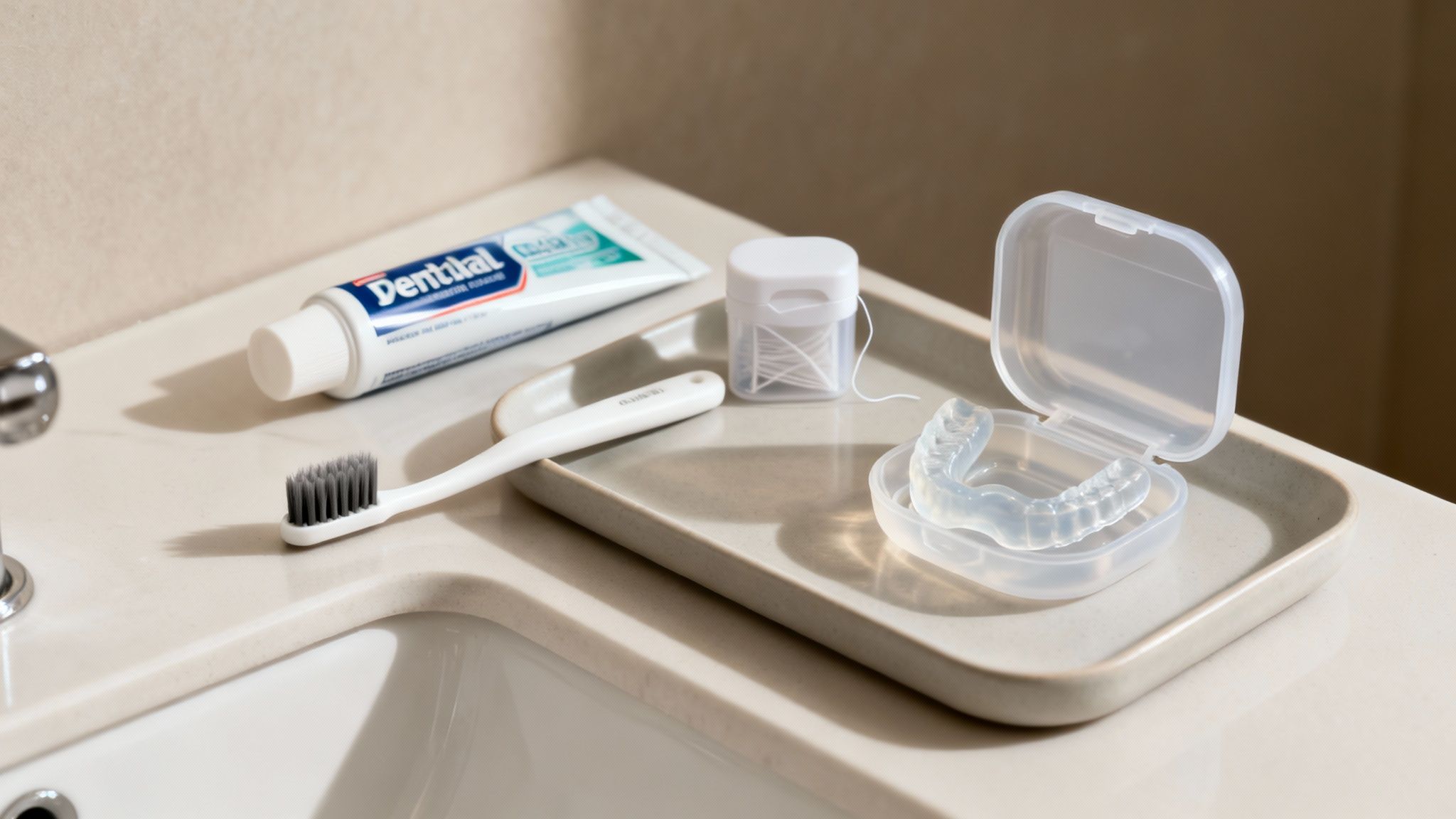
Many of these tips are similar to our advice on how to care for dental crowns, because the main idea is to protect both the dental work and the natural tooth underneath.
Habits to Avoid Protecting Against Damage
Porcelain veneers are very strong, but they can still break. Certain habits put them at risk of chipping or cracking.
The most common problems come from putting sharp pressure on the edges of your veneers. This includes chewing on ice, biting your fingernails, or using your teeth to open packages. Using your teeth as tools is one of the quickest ways to damage your veneers.
“The number one non-clinical reason I see veneers fail prematurely is bruxism, or teeth grinding. A custom-fit nightguard is non-negotiable for anyone who grinds—it’s the single best piece of insurance you can get for your new smile.” – Dr. Dariene Lazore, DMD
Long-Term Care Tips for Adults and Seniors
As we get older, our dental health needs can change. For adults and especially seniors, a common problem is dry mouth, often caused by medications. Saliva helps clean your mouth, so having less of it can increase your risk for cavities and gum problems. It's important to stay hydrated and talk to your dentist about how to manage dry mouth.
Regular dental check-ups are also crucial. Your dentist can spot small problems before they become big ones and make sure your gums stay healthy around your veneers.
By following these effective strategies for long-term porcelain veneer care, you can help your smile stay beautiful for a very long time.
What If Veneers Aren't the Right Choice for Me?
Veneers are a great cosmetic option, but they aren't right for everyone. They need a healthy foundation to work well and last a long time. In some cases, another treatment might be a better choice for your smile.
You wouldn't put a new roof on a house with a weak foundation. The same idea applies to your teeth. If you have a lot of tooth decay or gum disease, those problems need to be fixed first. A healthy mouth is always the number one priority.
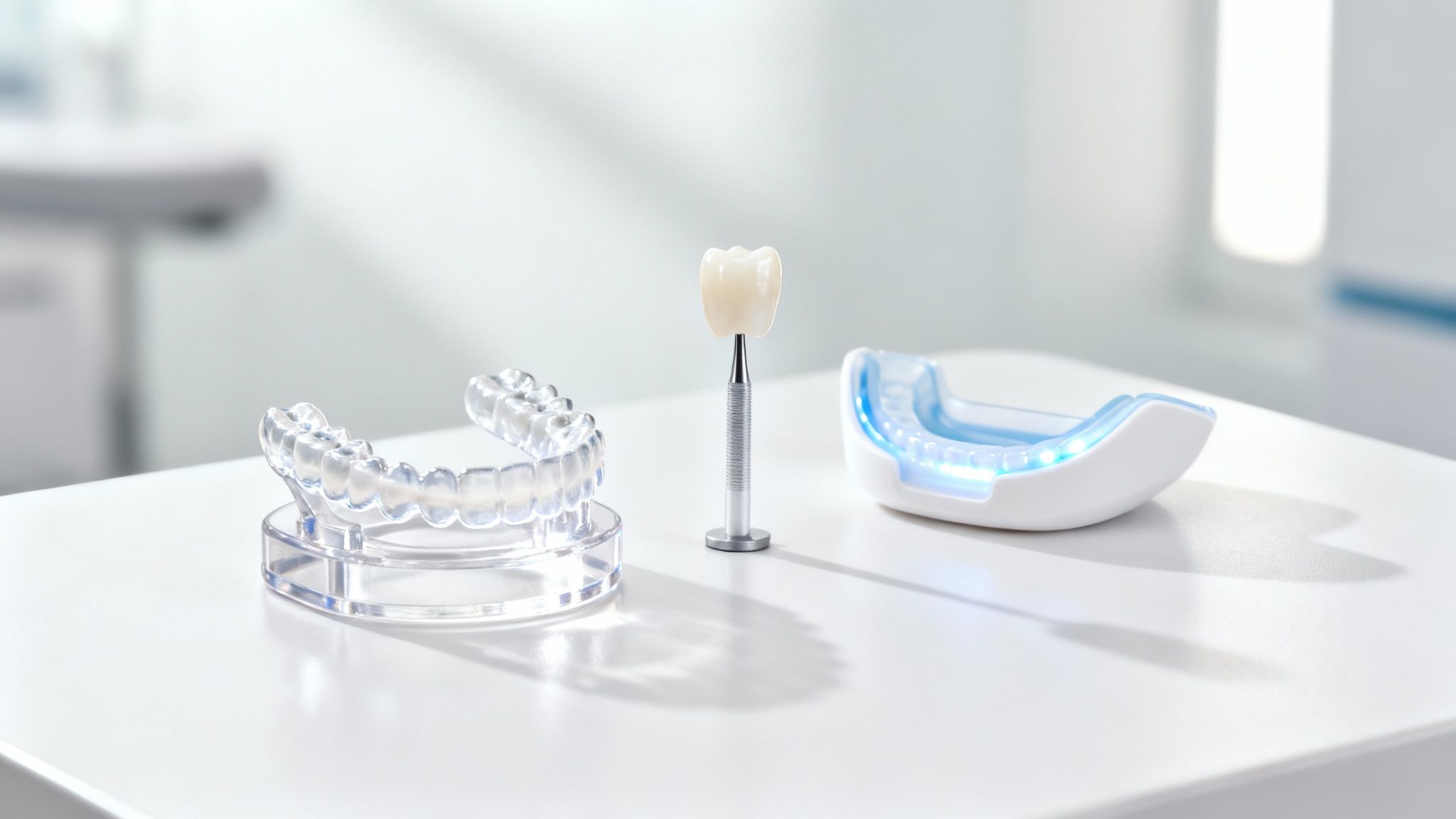
The same is true for major teeth alignment issues. Veneers can fix small gaps or slightly crooked teeth, but they can't fix bigger bite problems. They are a cosmetic finish, not a structural solution.
Finding the Right Solution for Your Smile
If veneers aren't the best choice for you right now, don't worry. Modern dentistry has many other great options to help you get the beautiful, healthy smile you want.
-
Orthodontics: For crooked teeth or bite problems, treatments like Invisalign are often the best first step. Straightening your teeth creates a healthier bite and a better foundation for any cosmetic work later on.
-
Dental Crowns: If a tooth is badly damaged or has a large filling, a crown is a better solution. A veneer only covers the front of the tooth, but a crown covers the entire tooth, giving it more strength and protection.
-
Professional Teeth Whitening: If your smile is healthy but looks dull or stained, professional whitening can make a big difference. It’s a simple way to brighten your teeth by several shades.
-
Dental Bonding: This treatment uses a tooth-colored resin to fix chips, cracks, or small gaps. To see how it compares to veneers, you can read our guide on dental bonding vs. veneers.
"The best cosmetic treatment is one that enhances your smile while fully supporting your oral health. Sometimes that means addressing alignment or decay first, which paves the way for a beautiful, lasting result." – Dr. Dariene Lazore, DMD
A good cosmetic dentist will talk with you about all your options. The goal is always to find a solution that not only looks great but also keeps your smile healthy and strong for years to come.
Answering Your Top Questions About Veneers
Let's finish by answering some of the most common questions people have about veneers and whether they are truly permanent. This quick guide will give you clear information to help you feel confident in your decision.
How Often Will My Veneers Need To Be Replaced?
How long your veneers last mostly depends on the material. High-quality porcelain veneers usually last 15 years or more if you take good care of them.
Composite veneers typically need to be replaced every 5 to 7 years. No matter which type you choose, regular dental checkups and good daily habits are the best way to make them last as long as possible.
What Should I Do If a Veneer Chips or Falls Off?
First, don't panic! Call your dentist right away. If it's a small chip, your dentist can often smooth it out or fix it with bonding material, so you won't need a new veneer.
If a veneer falls off completely, save it. If the veneer and your natural tooth are not damaged, your dentist can often clean it and glue it back on in one visit.
This is where having a dentist with cosmetic expertise is very helpful. A skilled dentist can often save a veneer, which can save you the cost of a new one. To learn more about the costs, it helps to understand how much veneers cost and what factors affect the price.
Is the Veneer Procedure Painful?
The procedure should not be painful. Your dentist will use a local anesthetic to numb the area before preparing your teeth, so you will stay comfortable.
It's normal to have some mild tooth sensitivity for a few days after the procedure. This is temporary and usually feels like the sensitivity you might have after a teeth whitening treatment.
Can I Still Get Cavities With Veneers?
Yes, and this is very important to remember. A veneer only covers the front of your tooth. The rest of your natural tooth is still exposed, especially along the gumline where the veneer ends. This means you can still get cavities on the parts of the tooth that are not covered.
That’s why brushing well and flossing every day are so important. These habits are key to preventing cavities and keeping your smile's foundation healthy.
Ready to discover if veneers are the right choice for your smile? At Beyond Dental Care, Dr. Lazore and our dedicated team are here to provide expert guidance and personalized care. Schedule your consultation today and take the first step toward the beautiful, lasting smile you deserve.