
Direct Answer: A periodontal screening measures the depth of the spaces between your teeth and gums to detect gum disease, something a standard cleaning cannot see or diagnose.
Most adults in Arrowhead Ranch and Stetson Hills know they’re supposed to get a cleaning twice a year. Far fewer understand that a periodontal evaluation, the part of a preventive visit where a hygienist measures the spaces between your teeth and gums, is a separate step, and arguably the more important one for long-term oral health.
A cleaning removes plaque and tartar from the surfaces of your teeth. A periodontal screening measures what’s happening below the gumline, where gum disease actually begins. These are two different things, and conflating them is one of the most common reasons gum disease goes undetected for years.
If you’ve been getting cleanings regularly but no one has mentioned pocket depths or charted your gum measurements, this article is for you. Understanding what a periodontal screening actually involves, and what it can catch early, is one of the most practical things you can do for your long-term oral health.
What Happens During a Periodontal Screening
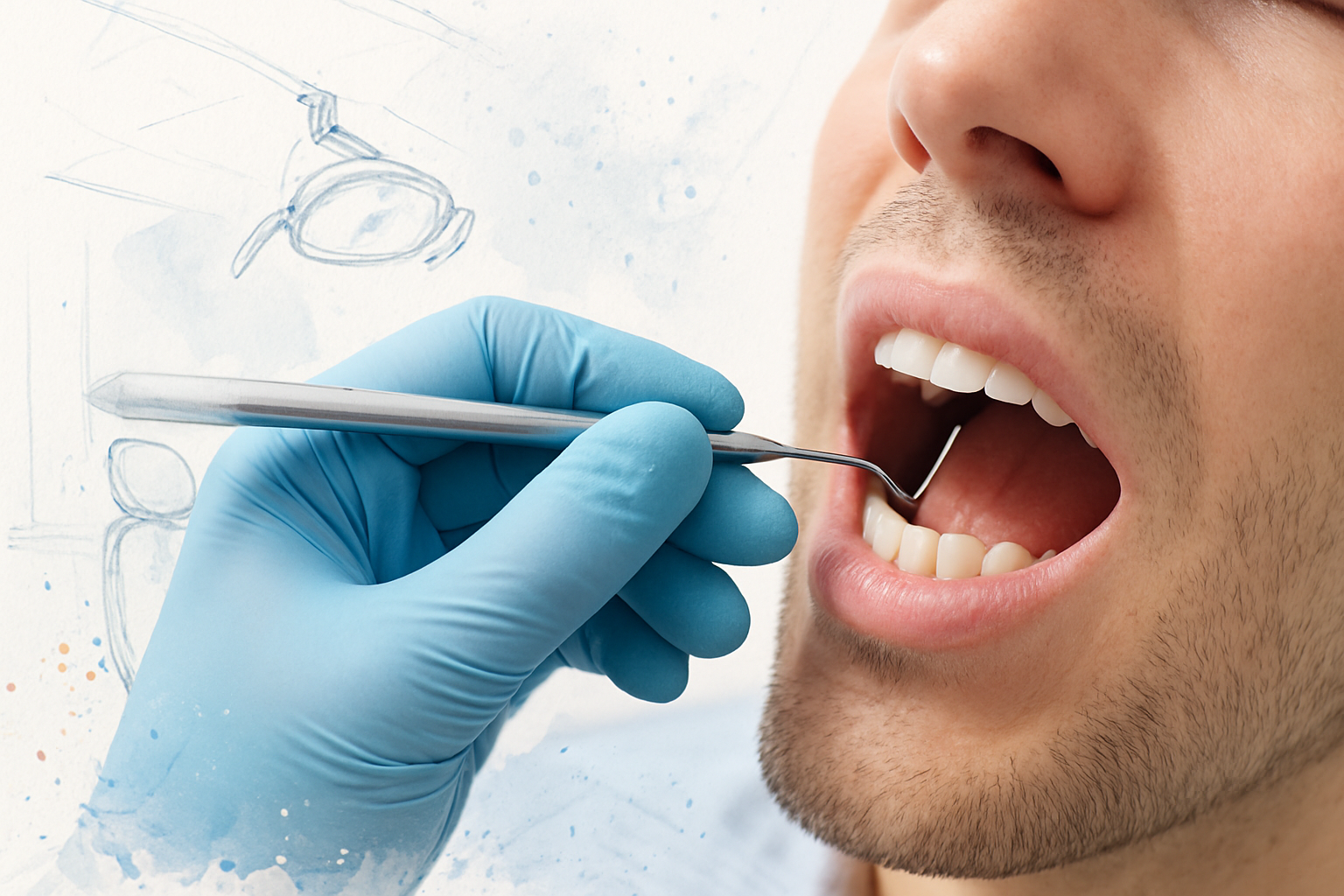
The tool is called a periodontal probe, a thin, calibrated instrument that measures the depth of the sulcus, the natural space between each tooth and the surrounding gum tissue. In a healthy mouth, that depth is typically 1 to 3 millimeters. When gum disease is present, that pocket deepens as the gum detaches from the tooth and bone.
A hygienist records measurements at multiple points around each tooth, usually six measurements per tooth. The numbers are called out and charted during the exam. It takes only a few minutes, and for most patients it’s mildly uncomfortable at worst.
What those numbers reveal is significant:
- 1-3 mm: Healthy. No cause for concern.
- 4 mm: Early gingivitis or inflammation. Reversible with improved home care and professional cleaning.
- 5-6 mm: Moderate periodontitis. Requires treatment beyond a standard cleaning.
- 7 mm or deeper: Advanced disease. May involve bone loss and require specialized care.
None of this is visible to the naked eye from the outside. You won’t feel it in the early stages. That’s exactly why the screening exists, what a preventive dental visit actually catches goes well beyond what most patients assume.
Why Early Detection Changes Everything
Gum disease is the most common cause of tooth loss in adults over 30. And yet Arizona adults underutilize preventive dental visits compared to the national average, which means a significant number of people are walking around with early-stage periodontitis and no idea.
The irony is that early gum disease, caught at a periodontal screening, is entirely manageable. At that stage, a thorough professional cleaning and improved at-home brushing and flossing habits can reverse the damage. Left undetected for several years, that same condition can progress to bone loss, tooth mobility, and eventual tooth loss, outcomes that require far more involved treatment.
According to the CDC, nearly half of adults aged 30 and older have some form of periodontal disease. For adults over 65, that number climbs above 70 percent. These aren’t rare cases, they’re people who likely felt fine right up until the problem became serious.
There’s also a broader health picture worth knowing. Research has associated untreated gum disease with elevated systemic inflammation, with links studied in relation to cardiovascular health and metabolic conditions. Your mouth isn’t isolated from the rest of your body, and periodontal health is increasingly understood as part of overall wellness, not just dental care. Wellness-conscious patients across Norterra and Vistancia are asking more informed questions about this connection, and it’s a fair conversation to have with your dentist.
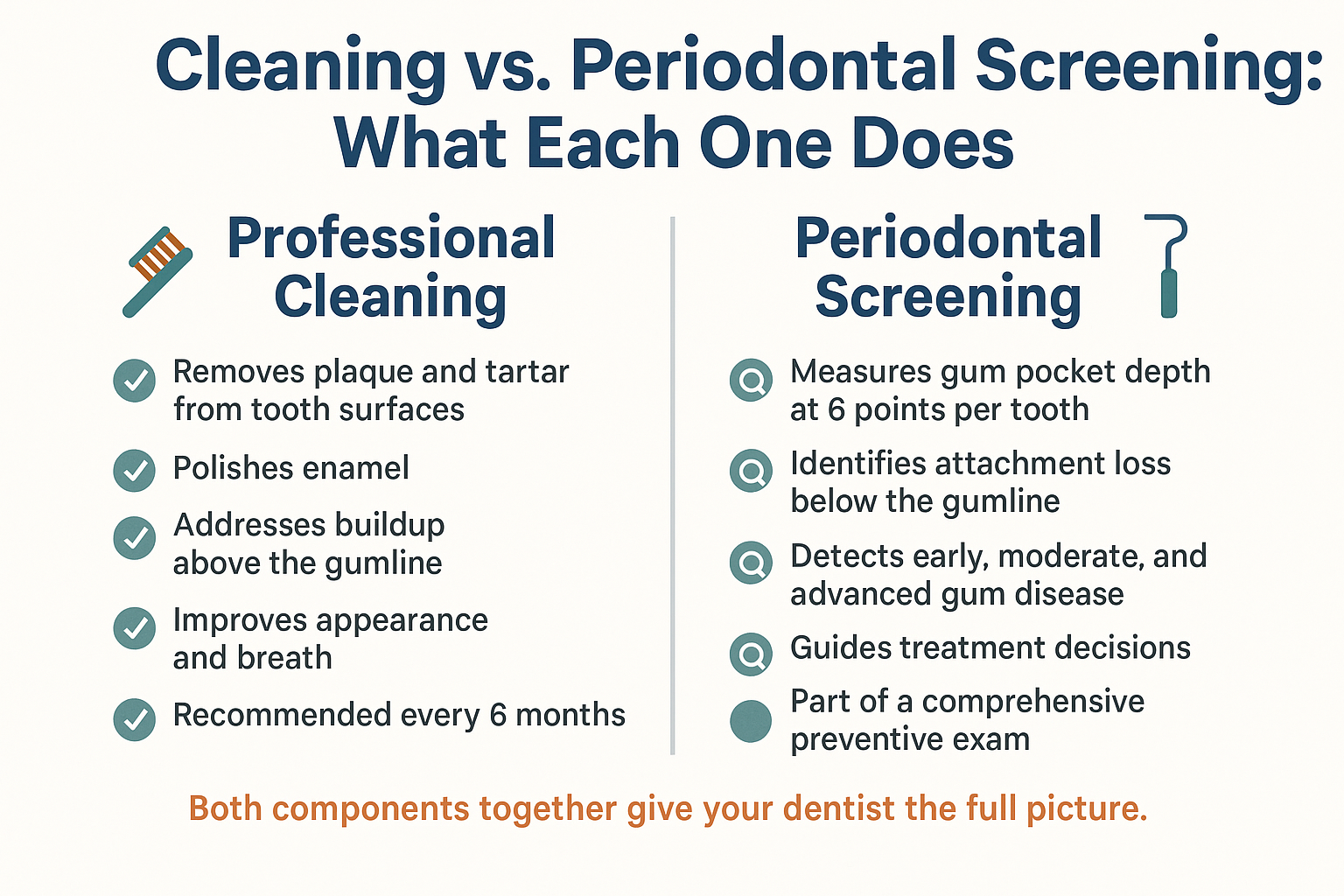
Cleaning vs. Periodontal Screening: What Each One Does
This comparison breaks down the key differences between a standard professional cleaning and a periodontal evaluation so patients know exactly what to expect from each.
Periodontal Health Is Ongoing, Not a One-Time Fix
One pattern that comes up regularly in dental care is the patient who has already been through active gum disease treatment and now needs ongoing management. Think about someone who has had root canal therapy and is now focused on perio maintenance, antibacterial treatment, and fluoride varnish as part of their long-term care plan. That’s a patient who has learned the hard way that gum disease doesn’t stay fixed on its own, it requires consistent monitoring and professional follow-through.
For patients who’ve had moderate to advanced periodontitis treated, standard twice-yearly cleanings are often not enough. Many are placed on a three- or four-month periodontal maintenance schedule, where pocket depths are re-charted and the areas below the gumline are cleaned more thoroughly than a routine visit allows. The goal is to keep the disease from reactivating.
If you’ve ever been told you had gum disease and then let follow-up visits slide, which happens more often than dentists like to see, getting a fresh periodontal screening is the right first step back. You can read more about what to expect if you’re overdue for a cleaning and returning after a gap. And if you’re wondering how this fits into the broader picture of preventive care, how often adults should really see a dentist is worth reading alongside this.
Gum Disease Stages: What the Pocket Numbers Mean
These general ranges give you a sense of how periodontal pocket depths are interpreted at a clinical exam. Your dentist will review your specific chart and explain what any findings mean for your care.
| Pocket Depth | What It Typically Indicates | Common Next Step |
|---|---|---|
| 1-3 mm | Healthy gum attachment | Routine cleaning and monitoring |
| 4 mm | Early gingivitis or mild inflammation | Improved home care, closer monitoring |
| 5-6 mm | Moderate periodontitis | Scaling and root planing (deep cleaning) |
| 7 mm or deeper | Advanced periodontitis, possible bone loss | Periodontal therapy, possible specialist referral |
What Periodontal Therapy Actually Involves
If a periodontal screening finds moderate or advanced disease, the next step is typically scaling and root planing, a deep cleaning that goes below the gumline using specialized instruments or ultrasonic scalers to remove bacteria, plaque, and tartar from the root surfaces. It’s more involved than a standard cleaning, but it’s non-surgical and performed under local anesthesia.
Mild soreness for a day or two is common after the procedure. Most patients find it far more manageable than they expected. At Beyond Dental Care, laser treatments may also be incorporated to support gum healing and reduce bacteria in more involved cases.
For patients whose disease has progressed significantly, Dr. Lazore may refer to a periodontist for advanced management, a sign of a practice that prioritizes the right outcome over handling everything in-house. That kind of transparent, patient-first approach is what separates a private practice from a corporate chain that just moves patients through. If you’re also managing restorative needs alongside gum disease, understanding when a crown versus a filling is the right choice can help you think through a more complete care plan.
Frequently Asked Questions About Periodontal Screenings
Is a periodontal screening the same as a cleaning?
No. A cleaning removes plaque and tartar from tooth surfaces. A periodontal screening uses a probe to measure the depth of the pockets between your teeth and gums, it’s a diagnostic step, not a cleaning. Both are typically done at a comprehensive preventive visit, but they serve completely different purposes.
Will I feel the probe during a periodontal screening?
Most patients describe it as mild pressure, not pain. If your gums are inflamed, there may be some sensitivity in specific spots. It takes only a few minutes and is one of the least uncomfortable parts of a dental visit.
How often should I have a periodontal screening done?
For patients with healthy gums, a periodontal evaluation is typically included as part of a comprehensive exam at least once a year. If you’ve had active gum disease, your dentist may chart your pockets at every visit, which could be every three to four months, to track changes over time.
Can I have gum disease and not know it?
Yes, and this is the most important thing to understand. Early-stage gum disease produces almost no noticeable symptoms. No pain, no visible swelling, nothing you’d catch at home. By the time bleeding gums or loose teeth appear, the disease has usually been present for a while. A screening catches it before those signs develop.
If I’ve been treated for gum disease before, do I still need screenings?
Absolutely, and more frequently than a patient without a history of gum disease. Periodontitis can reactivate, especially if home care slips or professional maintenance is delayed. Ongoing periodontal screenings are how your dentist tracks whether the disease is stable or beginning to progress again.
Ready to Know Where Your Gum Health Actually Stands?
If it’s been more than a year since anyone charted your pocket depths, or if you’ve had gum disease treated in the past and let maintenance slide, a periodontal evaluation is the right place to start. Beyond Dental Care sees patients across North Glendale, Stetson Hills, Arrowhead Ranch, and the wider Upper West Side Phoenix area, with evening and Saturday appointments available for busy schedules. You can reach the practice at 623-267-8088 or visit beyonddentalcare.com to learn more or request an appointment.