
A little bleeding after your dental implant surgery is normal. You should even expect it. Seeing some pink saliva or a little oozing from the implant spot for the first day or two is just your body starting to heal.
But, heavy bleeding that doesn't stop when you apply pressure is not normal. If that happens, you should call your dentist right away.
What to Expect Right After Your Surgery
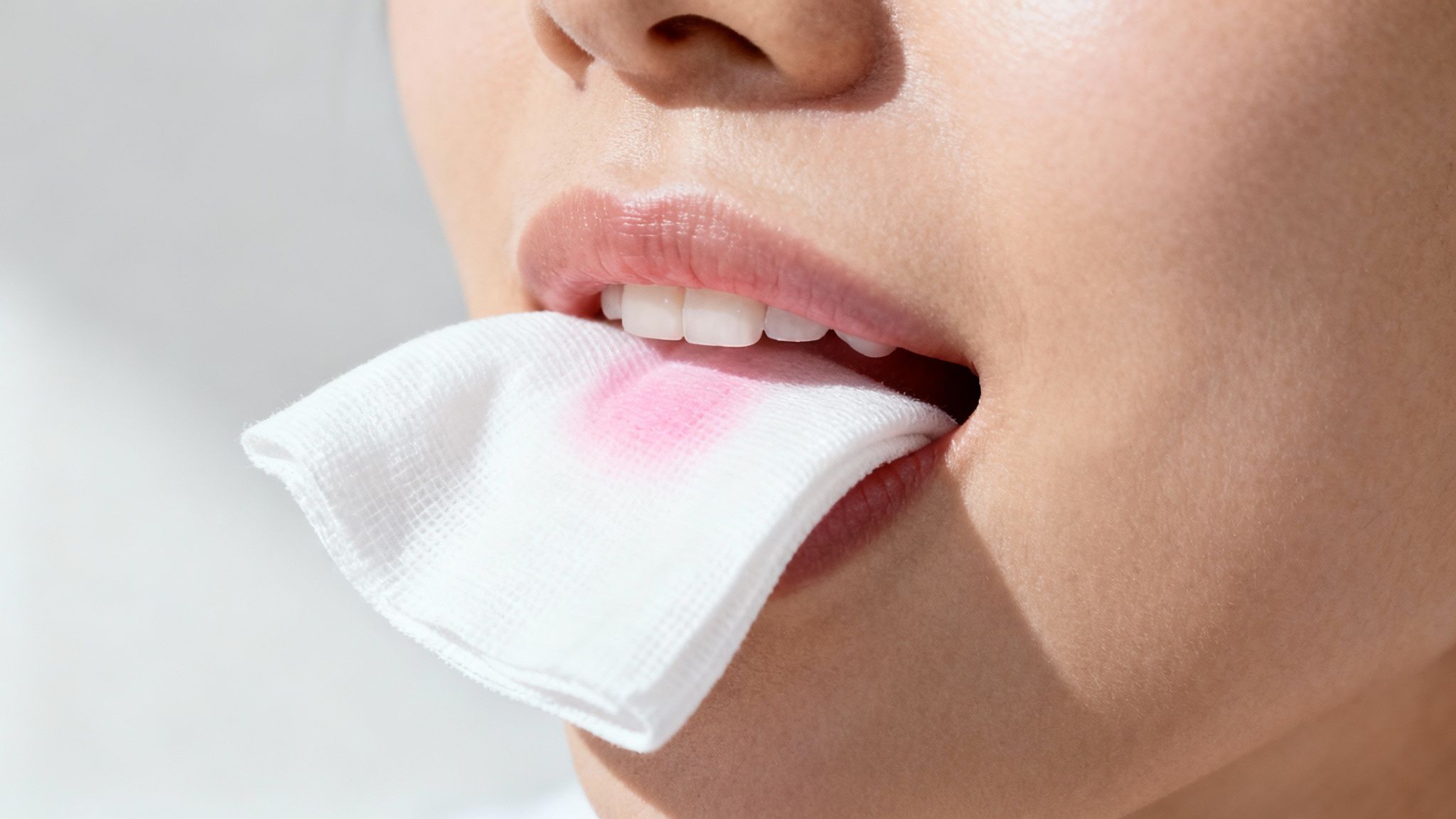
The first 24 to 48 hours after your surgery are the most important for healing. It's okay to feel excited about your new smile but also a little nervous about what to expect. Let's talk about the biggest worry: bleeding.
Based on Dr. Lazore’s surgical experience, a little bleeding is a normal part of healing. It's like when you scrape your knee. It oozes a bit as your body forms a clot to protect it and start repairing the skin. That's what's happening in your mouth.
Right after surgery, we’ll give you gauze to bite on. This helps control the first bit of bleeding, which usually slows down in about an hour. It’s normal to see some pink saliva for the next couple of days.
Understanding the First 48 Hours
During this time, your job is to rest and let the area heal. A blood clot will form over the implant. This clot is very important. It acts like a natural bandage, protecting the area from germs and helping new tissue grow.
This is why we ask you to avoid anything that creates suction in your mouth, like smoking or using a straw. These actions can pull the clot out, which can cause more bleeding and make healing take longer.
To help you feel more sure about your recovery, it’s good to know the difference between what’s normal and what’s a red flag.
Here’s a simple chart to help you understand what your body is doing in those first two days.
Normal Healing vs. Red Flags in the First 48 Hours
| Symptom | What's Normal (First 48 Hours) | When to Worry (Red Flag) |
|---|---|---|
| Bleeding | A little oozing, or saliva that is pink or reddish. | Bright red blood that fills your mouth or soaks gauze in minutes. |
| How Long | Bleeding that gets better over time and stops with light pressure. | Bleeding that doesn’t slow down after 20-30 minutes of firm pressure. |
| Clots | A dark clot forms over the spot and stays there. | Large, jelly-like clots that fall out easily. |
| Pain | Discomfort you can manage with pain medicine. | Bad, throbbing pain that doesn't get better with medicine. |
You can use this chart at home. Most of what you feel will be in the "normal" column. If you notice anything from the "Red Flag" column, please call us.
Dr. Lazore’s Insight: "The most common mistake I see is patients rinsing their mouth too hard or too soon after surgery. Being gentle for the first two days makes a huge difference in healing without problems."
This early period is key for your whole healing process. For more details, you can read our guide on recovering from oral surgery. By following these easy steps, you can feel safe and in control of your recovery.
Your Practical Post-Op Recovery Checklist
Having a clear plan helps make recovery go smoothly. After your implant surgery, your main jobs are to rest and let your body heal. This checklist, based on Dr. Lazore’s years of surgical experience, gives you simple, clear steps for the first week.
Following these steps is the best way to manage bleeding and protect the important blood clot. Think of the clot as a natural bandage that needs to be left alone.
The First 24-48 Hours: Your To-Do List
What you do in the first two days is very important for a good recovery. Here’s what to focus on to control bleeding and start healing.
- Apply Gentle Pressure: Bite down gently but firmly on a clean piece of gauze over the surgery spot. Change the gauze every 30-45 minutes. This steady pressure is the best way to control oozing.
- Keep Your Head Up: When you rest or sleep, use an extra pillow to keep your head higher than your heart. This simple trick helps reduce bleeding and swelling.
- Eat Soft Foods: For now, stick to cool, soft foods. Things like yogurt, smoothies (use a spoon, not a straw!), applesauce, and mashed potatoes are good choices. Avoid hot, spicy, or crunchy foods that can bother the area.
Important Things to Avoid After Surgery
What you don't do is just as important. Stay away from these things to protect the healing spot and avoid problems like more bleeding or infection.
- No Straws or Spitting: The suction from using a straw or spitting can pull out the blood clot. This can cause a painful problem called "dry socket" and make the bleeding start again.
- Do Not Smoke: Smoking makes it much harder for your body to heal. It increases your risk of infection and can even cause the implant to fail. You must avoid all tobacco products while you recover.
- Avoid Rinsing Hard: For the first 24 hours, do not rinse your mouth at all. After that, you can start gently rinsing with salt water (half a teaspoon of salt in a glass of warm water) after you eat. Be very gentle—let the water fall out of your mouth instead of spitting.
Dr. Lazore’s Pro-Tip: "Patients often want to check on the implant by touching it with their tongue or finger. Please don't do this! Leaving the area alone is one of the best things you can do to help it heal quickly."
Besides these dental tips, you might want to look at some general post-surgery recovery guidance for a better healing experience overall. The stitches we use also help with healing. You can learn more about sutures in dentistry in our guide. At Beyond Dental Care, we provide responsive follow-up care to make sure you feel supported at every step.
A Day-by-Day Look at Your Healing Timeline
Getting a dental implant is a surgery, and healing takes time. Knowing what to expect each day can make you feel less worried. Everyone heals differently, but there is a common timeline most patients follow.
This is like a map for your first week. It helps you see that what you're feeling is normal. For example, bleeding should stop quickly, but swelling might get worse before it gets better. This is all part of your body's natural healing.
This picture gives you a quick look at the first week and the important parts of your recovery.

As you can see, the first few days have the most happening. Bleeding is one of the first things to stop, while swelling takes a little longer to go away.
What to Expect Day by Day
Let's look at the first week so you know what is coming. Remember, this is just a general guide.
- Days 1-2: You will probably see some oozing or have pink saliva. This is normal. Use gauze and apply gentle pressure. Your main job is to rest with your head raised.
- Days 3-4: Swelling and bruising may be at their worst around this time. This is a normal healing reaction. The bleeding should be gone by now. You can start rinsing gently with warm salt water to keep the area clean.
- Days 5-7: You should start to feel much better. Swelling will go down, and any pain should be much less. You can slowly add softer foods back into your diet.
Based on Dr. Lazore’s surgical experience, patients who follow their instructions closely during the first week have a much easier and faster recovery. This timeline is a good guide for what healthy healing looks like.
This first week is just the start. To see what to expect in the next weeks and months, you can learn how long it takes to recover from dental implants in our full guide. At Beyond Dental Care, we care about your recovery. If you feel like you aren't healing like this timeline shows, please call us. We are here to answer your questions.
Red Flags That Mean You Should Call Us
Most people recover from dental implant surgery without any problems. But knowing when to call us will give you peace of mind. Your body is good at telling you when something is wrong. Based on Dr. Lazore’s surgical experience, calling us early is the best way to stop small issues from becoming big problems.
This isn't to scare you, but to help you be prepared. Here is a clear list of red flags that mean it's time to call our office right away.
When Bleeding Is a Concern
The normal, slight oozing should stop within the first 48 hours. If you see bleeding that is heavy, bright red, and won't stop, that is a clear sign to call us. But what does "heavy" mean?
A good rule is if you are soaking through a new piece of gauze in less than an hour. This kind of bleeding doesn't stop with pressure and needs a professional to look at it. This is rare, but it is the most serious red flag.
Dr. Lazore's Guidance: "Don't wait to see what happens if you have heavy, uncontrolled bleeding. A quick phone call lets us know what's going on and give you advice right away. It's always better to be safe."
Other Important Warning Signs to Watch For
Besides bleeding, your body has other ways to signal a problem. Look for these signs, especially if they show up a few days after your surgery:
- Pain That Gets Worse, Not Better: After surgery, your pain should slowly get better each day. If your pain suddenly gets worse or isn't helped by your pain medicine after day three, that's a red flag.
- Signs of Infection: A fever, warmth around the implant that won't go away, or a bad taste or smell from the area are signs of infection. You might also see yellow or white pus.
- Bad or Worsening Swelling: Some swelling is normal and is usually worst around day three. After that, it should go down. Swelling that keeps getting worse or makes it hard to breathe or swallow is an emergency.
It's also important to know about other issues that need a call. For example, you can learn about serious post-operative dental complications like an abscess. The good news is that major problems with bleeding after surgery are very rare. One study showed they happen in only about 2.2% of cases, and even those were easy to treat in the office.
At Beyond Dental Care, our care for you continues after you leave. We offer responsive and easy-to-reach follow-up care. If you have any of these red flags, call us. For serious problems outside of office hours, our guide to finding urgent dental care can help. Your safety and smooth recovery are what matter most to us.
Why an Old Implant Might Start Bleeding
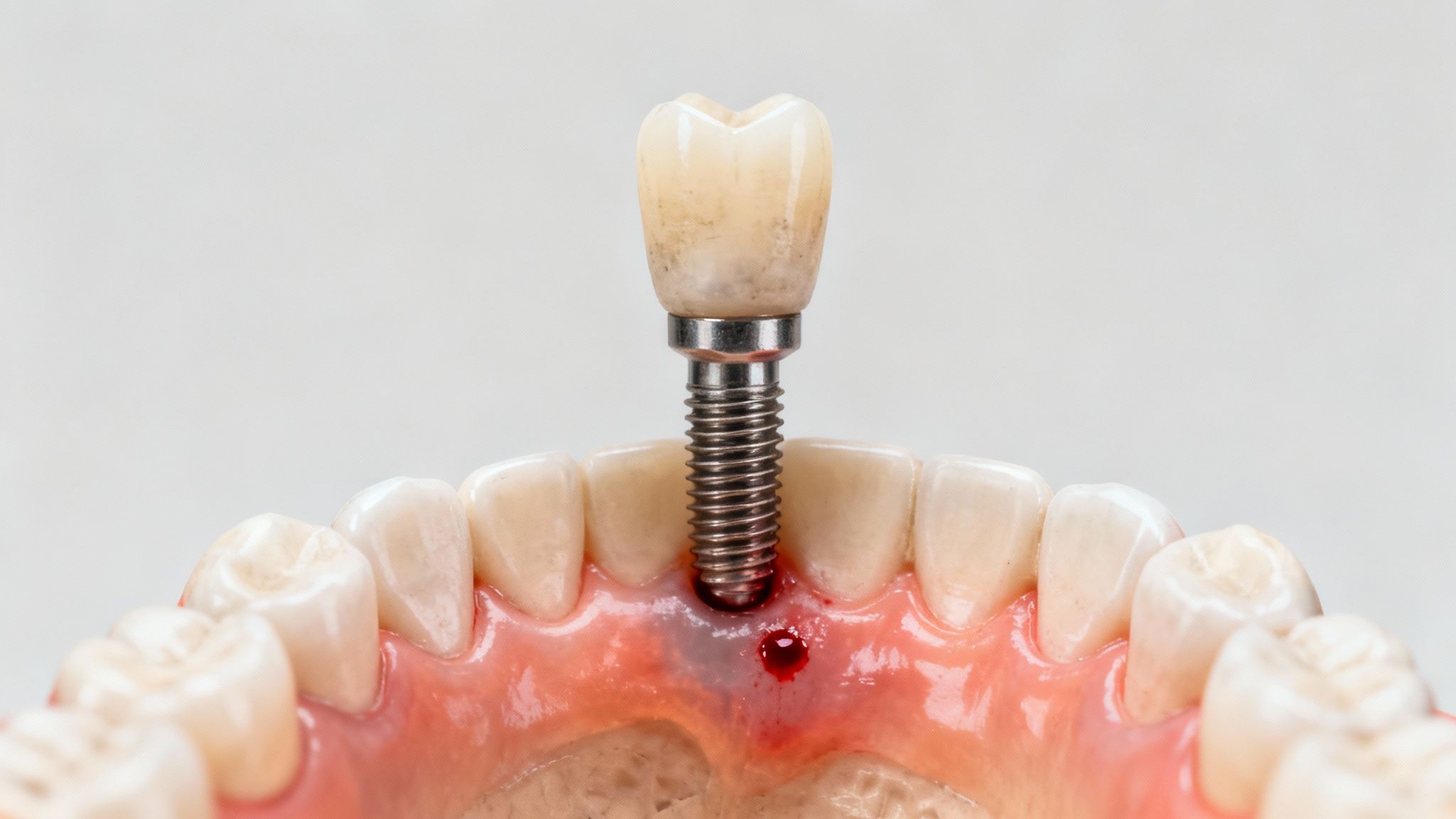
If you see bleeding around an implant that healed a long time ago, your body is telling you something. This is not like the normal bleeding right after surgery. Bleeding from an old implant is almost always a sign of a problem that a dentist needs to check. Don't panic, but do take action.
Most often, this bleeding means the gums around the implant are swollen. The two most common reasons are called peri-implant mucositis and peri-implantitis. Knowing the difference can help you protect the investment you made in your smile.
The Difference Between Mucositis and Peri-Implantitis
Let's make it simple. Peri-implant mucositis is like gingivitis (early gum disease) for your implant. It's caused by plaque build-up. You might see red, swollen gums, or a little bleeding when you brush. The good news is that it can be fixed. A professional cleaning and better brushing at home can usually solve the problem completely.
But peri-implantitis is much more serious, like advanced gum disease. If mucositis isn't treated, the swelling can get worse and start to damage the bone that holds your implant. This is a serious problem that can make the implant loose and even cause it to fail.
Dr. Lazore’s Insight: "If you see bleeding around an old implant, it's time to make an appointment. If we catch it early as mucositis, it's easy to treat. If you wait until it becomes peri-implantitis, you could risk losing the implant."
Signs of Trouble and What to Do
Sadly, these problems are not rare. Studies show that about 31-46% of people with implants get peri-implant mucositis. The more serious peri-implantitis affects about 15-18% of patients. This is why seeing early signs like bleeding is so important to prevent bone loss.
Protecting your implant for life comes down to two things: good oral hygiene and regular dental check-ups. Brushing and flossing around your implant every day is a must to stop plaque from building up. Our guide on how to clean dental implants shows you the best ways to keep your implant and gums healthy.
At Beyond Dental Care, our follow-up care includes checking your implant’s health at every visit. If you see any bleeding, pain, or swelling at home, call us. We can check it out and make a plan to get your gums healthy again, keeping your smile strong for years.
We’re With You Long After Your Surgery is Done
Getting a dental implant is a big step, but our work isn’t over when you leave our office. At Beyond Dental Care, your surgery is just the beginning of our partnership. We are with you for the long term, making sure you feel supported and sure of yourself through every part of your healing.
It’s normal to feel a little worried or have questions. That’s why we make sure you never feel alone. Dr. Lazore and our team know that feeling calm is just as important as healing well. You will always have a way to reach us for help.
Our Promise to You During Recovery
We want you to feel safe and ready for the days ahead when you leave our office. To make sure your recovery is as easy as possible, every patient gets a helpful post-op checklist with very clear instructions.
- Direct Access for Your Questions: We will give you our direct contact information. If you have a question that isn’t an emergency, you can get a quick answer.
- Checking In On You: We don't just wait for you to call us. Our team will call you to check in and make sure you are healing well.
- Guidance for the Unexpected: If you have a red-flag sign like heavy bleeding or bad pain, we have a clear plan to get you the right care, right away.
Dr. Lazore always says, "A patient who feels supported and informed is a patient who heals better. Our goal is to eliminate the guesswork and worry, so you can focus entirely on a safe and comfortable recovery."
Choosing Beyond Dental Care is about more than just getting a new tooth. It's about choosing a team that truly cares about your new smile. We're here to guide you, answer your questions, and give you the expert care you need for a healthy, beautiful smile.
Got Questions About Bleeding After Your Implant Surgery?
It’s normal to have questions while you recover. To help you feel more at ease, Dr. Lazore and our team have answered the questions we hear most often about bleeding after dental implant surgery.
How Much Bleeding Is Too Much?
A little bit of pink saliva or some light oozing for the first 24-48 hours is normal. It’s a sign that your body is starting to heal.
However, if you see bright red blood that soaks a piece of gauze in less than an hour, that's a red flag. That is more than we expect to see, and you should call our office right away.
Is It Okay to Brush My Teeth if I See a Little Blood?
Yes, but you have to be very gentle. For the first few days, you should not touch the surgery spot at all. You can and should still brush your other teeth carefully. The goal is to protect the important blood clot that is forming.
Based on Dr. Lazore’s surgical experience, one of the best things you can do is leave the surgery spot alone. After 24 hours, you can start rinsing gently with salt water. This is a much safer way to keep the area clean without causing problems.
What if the Bleeding Stops and Then Starts Again?
Don't worry. If a little bleeding starts again a day or two later, it usually means the spot was bothered. Maybe you ate something too hard or rinsed too hard. Usually, you can fix it by putting gentle, firm pressure on it with a new piece of gauze. If the bleeding is heavy or won't stop, that's when you should call us.
How Long Will My Saliva Look Pink?
Seeing pink saliva is very common and normal for the first one to two days after your surgery. As the bleeding slows down, your saliva will go back to being clear. If it is still pink or red after 48 hours, it's a good idea to call us just to be safe.
At Beyond Dental Care, we’re here for you long after your surgery is over. We provide responsive follow-up care and are always ready to answer your questions, ensuring you feel supported and confident throughout your entire recovery.
Your journey to a healthy, brilliant smile doesn't end when the surgery is over, and neither does our commitment to you. For expert-led guidance and dedicated follow-up care you can count on, trust the team at Beyond Dental Care. To learn more or schedule your consultation, please visit us at https://beyonddentalcare.com.