
Before you can even think about how to fix gaps in your teeth, you have to understand why they showed up in the first place. These spaces, which we call a diastema in the dental world, usually come from predictable causes—genetics, certain habits, or even underlying gum issues. Getting to the root of the problem is the only way to find a fix that actually lasts.
Why Do I Have Gaps Between My Teeth?
Seeing a new gap appear—or finally deciding to do something about one you’ve had for years—can be a bit unsettling. But rest assured, it’s an incredibly common reason people visit their dentist. The causes are often pretty straightforward, and they give us a clear roadmap for creating the most effective treatment plan for you.
Let’s break down the main culprits.
Genetics and Natural Development
For a lot of people, the answer is simply in their DNA. A common genetic trait is a mismatch between the size of your jawbone and your teeth. If your jaw is a bit too large for your teeth, gaps naturally form because there’s just too much room along the dental arch.
On the flip side, some people are born with teeth that are slightly undersized, especially the lateral incisors right next to the two front teeth. This size discrepancy alone can create noticeable spaces.
The Role of Your Oral Tissues
Sometimes, it’s not the teeth or jaw but the soft tissues in your mouth that are to blame. A classic example is an oversized labial frenum. That’s the little fold of tissue connecting your upper lip to the gums right above your two front teeth.
If this tissue is too large or thick, it can grow down between the two central incisors. This physically prevents them from moving together, creating that signature gap so many people want to close.
Habits That Create Spaces
Certain habits, especially those carried over from childhood, can put just enough pressure on teeth to slowly push them apart over time. You might not even realize you’re doing it, but the long-term impact can be significant.
- Thumb Sucking: This childhood habit places constant forward pressure on the front teeth, causing them to flare out and create gaps.
- Tongue Thrust: This is a swallowing reflex where the tongue pushes against the front teeth instead of the roof of the mouth. When you consider you swallow thousands of times a day, that consistent, gentle pressure can easily create or widen a diastema.
Underlying Health Conditions
Finally, your overall oral health is a major factor. Gum disease (periodontitis) is a serious and common reason for new gaps appearing in adulthood. As gum disease gets worse, it destroys the bone and tissues that hold your teeth firmly in place.
This loss of support can cause teeth to become loose and shift, leading to new or widening spaces between them. If gum disease is the culprit, we have to treat that first—no cosmetic fix will last until the foundation is healthy.
Before jumping into a treatment, it’s important to match the cause with the right solution. A quick look at the most common reasons for gaps and their typical starting points can help clarify the best path forward.
Common Causes of Teeth Gaps and Initial Treatment Paths
| Cause of Gap (Diastema) | Commonly Recommended Treatment |
|---|---|
| Genetics (Jaw/Tooth Size Mismatch) | Orthodontics (braces or clear aligners) to reposition teeth. |
| Undersized Teeth | Dental bonding, veneers, or crowns to increase tooth size. |
| Oversized Labial Frenum | A frenectomy (minor surgical procedure) followed by orthodontics. |
| Habits (Thumb Sucking/Tongue Thrust) | Orthodontics combined with myofunctional therapy to correct the habit. |
| Gum Disease (Periodontitis) | Periodontal therapy to treat the infection, followed by restorative options. |
Figuring out the why behind your tooth gap isn’t just a diagnostic step—it’s the foundation for a successful, long-lasting fix. Once you and your dentist have identified the true cause, you can confidently move forward with a treatment that makes sense for you.
Moving Teeth with Braces and Aligners
When you want a permanent fix for gapped teeth, you have to get to the root of the problem: the position of the teeth themselves. That’s where orthodontics comes in. Instead of just patching over the space, orthodontic treatments physically move your teeth into their ideal alignment. This not only closes the gaps for good but also improves your bite and overall oral health.
The two main ways to do this are with traditional metal braces or modern clear aligners. Both work by applying slow, steady pressure to guide your teeth into a new, gap-free smile. Think of it less like a quick fix and more like a carefully planned landscaping project for your mouth—you’re rearranging everything for a perfect, lasting result.
The Classic Approach: Traditional Metal Braces
There’s a reason traditional braces have been the go-to for decades: they flat-out work. They use a system of metal brackets bonded to each tooth, all connected by a thin archwire. Your orthodontist periodically adjusts this wire to create the gentle force needed to shift your teeth and close any spaces.
One of the biggest upsides to braces is their raw power. They can handle even the most complex orthodontic cases, from large gaps and severe crowding to major bite corrections. Since they’re fixed to your teeth, they are working, which can sometimes mean faster results for certain types of tooth movements.
Of course, the most obvious drawback is their appearance. Many adults are hesitant to commit to visible metal brackets and wires. They also demand some extra effort to keep clean, as plaque can easily build up around all that hardware.
A Modern, Discreet Alternative: Clear Aligners
Clear aligners have exploded in popularity, especially among adults who want to fix gaps without the look of traditional braces. Invisalign is the brand most people know, but the technology is all about using a series of custom-made, clear plastic trays that fit snugly over your teeth. You’ll wear each tray for about one to two weeks before swapping it for the next one in your set.
Each new aligner is slightly different, nudging your teeth millimeter by millimeter toward their final destination. The main draw is that they’re nearly invisible, so you can straighten your teeth without broadcasting it to the world. Plus, they’re removable, which means you can eat, drink, brush, and floss just like you always have.
The real secret to success with clear aligners comes down to one word: compliance. You have to wear them for 20-22 hours per day. If you don’t, your progress can slow down or even stop, stretching out your treatment time.
This isn’t some new fad; it’s a proven method backed by years of success. Historically, dental braces have an impressive success rate of over 85% for closing gaps and fixing alignment. Today, orthodontics is more accessible than ever, with clear aligners seeing a 20% annual growth in popularity since 2015. They offer a discreet choice for the nearly 4 million people in the U.S. currently wearing orthodontic appliances.
Comparing Your Orthodontic Options
So, which is right for you? The choice between braces and clear aligners usually comes down to your specific dental needs, your lifestyle, and what you prioritize. There’s no single “best” option—it’s about what’s best for you.
Here’s a quick, practical rundown:
- Effectiveness: Both are fantastic at closing gaps. However, traditional braces still have the edge for very complex situations, like cases requiring significant bite correction or rotating stubborn teeth like canines.
- Appearance: Clear aligners are the hands-down winner. Their discreet nature is the number one reason adults choose them.
- Comfort: Both options will cause some initial soreness as your teeth start to shift. That said, many people find aligners more comfortable day-to-day since there are no metal parts to poke or irritate the inside of your cheeks and lips.
- Maintenance: Aligners are a bit easier here. You just take them out to brush and floss normally. Braces require a little more technique and special tools, like floss threaders, to clean effectively around the brackets.
- Cost: The price is often quite similar. In some instances, very complex cases requiring traditional braces might cost more, while simpler alignment issues treated with clear aligners can be more budget-friendly.
Ultimately, a consultation with a dental professional is the only way to know for sure which path is right for your smile. If you’re still weighing the pros and cons, our detailed guide on Invisalign versus traditional braces can give you even more to think about. Whichever you choose, orthodontics is a true investment in a healthy, gap-free smile that will last a lifetime.
Faster Fixes with Veneers and Bonding

While orthodontic treatments are fantastic for structurally moving your teeth, not everyone wants—or needs—to wait months or even years for results. If your main goal is a quick cosmetic fix for small-to-moderate gaps, dental bonding and porcelain veneers offer a much faster route to a smile you’ll love.
Instead of repositioning your teeth, these cosmetic procedures work by adding material to them. This effectively “builds out” the tooth to close the space. It’s a perfect strategy for someone with a symmetrical gap between their front teeth who is looking for a near-instant transformation.
Dental Bonding: A Quick and Effective Solution
Dental bonding is often the simplest and fastest way to fix minor gaps. You can think of it as an artistic touch-up for your smile. Your dentist applies a tooth-colored composite resin, which has a putty-like consistency, directly onto your teeth. They then skillfully sculpt this material to fill the gap, making sure it blends perfectly with your natural tooth shape and color.
Once the shape is just right, a special curing light hardens the resin, bonding it securely to your tooth. The final touch is polishing the area until it has the same natural sheen as your enamel. The entire process for one tooth often takes just 30 to 60 minutes, which means you can walk out of a single appointment with a brand-new look.
This method is an excellent choice for small, cosmetic gaps where the surrounding teeth are otherwise healthy and properly aligned.
Porcelain Veneers: A Durable and Dramatic Transformation
If you’re looking for a more comprehensive and long-lasting cosmetic solution, porcelain veneers are an incredible option. Veneers are ultra-thin, custom-made shells of high-quality dental porcelain that are bonded to the front surface of your teeth. They are designed to completely transform your smile by masking imperfections like gaps, stains, chips, or even minor misalignment.
Getting veneers usually takes two visits. During the first appointment, your dentist gently removes a tiny amount of enamel from the tooth’s surface. This ensures the veneer fits perfectly without looking bulky. An impression of your teeth is then taken and sent to a specialized dental lab where your custom veneers are meticulously crafted.
At your second visit, your dentist will bond the finished veneers to your teeth. The result? The gaps are gone, and you’re left with a stunning, uniform, and radiant smile.
Key Takeaway: The main difference is this: bonding adds to your existing tooth in a single visit, while veneers cover the front of your teeth with a new, durable surface, which takes two visits.
Both procedures are popular for adults who want fast aesthetic improvements. Research shows that while bonding is a quick fix that lasts 3 to 10 years, the porcelain or composite shells of veneers are more durable, with an average lifespan of 10 to 15 years. When applied by a skilled dentist, veneers are highly effective, successfully closing gaps in over 90% of cases.
Making the Right Choice: Bonding vs. Veneers
So, how do you decide between bonding and veneers? It usually comes down to four key factors: the size of the gap, your budget, your long-term goals, and your timeline.
Let’s walk through a real-world scenario. Imagine you have a small but noticeable gap between your two front teeth.
- For a Quick Fix: If you have a big event coming up, like a wedding or an important interview, and need an immediate result, dental bonding is the clear winner. It’s a single-visit procedure that delivers instant gratification.
- For a Lasting Investment: If your top priority is durability and you want a solution that will look fantastic for a decade or more, porcelain veneers are the superior choice. They are highly resistant to stains and chipping, maintaining their beauty for years to come.
- Cost Considerations: Bonding is typically more affordable upfront than porcelain veneers, making it an easier entry point into cosmetic dentistry. However, because veneers last longer, their cost may be more economical in the long run. If you’re weighing the financial side, it helps to understand what goes into the cost of veneers to make a fully informed decision.
- Aesthetic Goals: While bonding can look incredibly natural, porcelain has a unique translucency that mimics natural tooth enamel almost perfectly. If you’re dreaming of a complete “smile makeover” that addresses not just gaps but also the color and shape of multiple teeth, veneers will give you a more uniform and dramatic result.
It’s crucial to remember that neither bonding nor veneers will fix underlying bite or alignment issues. These are purely cosmetic solutions. If your gap is the result of crooked teeth or a misaligned jaw, your dentist will likely recommend orthodontics first to build a stable foundation for your smile.
Restoring Your Smile With Implants And Crowns

When the space in your smile is from a completely missing tooth, a simple cosmetic fix won’t cut it. This situation calls for a true restorative solution—one that rebuilds the structure and function of your bite. That’s where treatments like dental implants, crowns, and bridges come into play. They do more than just fill a space; they bring back your bite and safeguard your long-term oral health.
Dental Implants: The Gold Standard Solution
There’s a reason dental implants are considered the top-tier solution for a missing tooth. It’s the only treatment that truly mimics a natural tooth, from the root all the way to the crown.
The process starts with a small titanium post that’s surgically placed right into your jawbone, acting as a new, artificial tooth root. Over time, the implant fuses with the bone—a process called osseointegration—creating an incredibly strong and stable foundation. Once that’s solid, a custom-made dental crown is attached to the top. It’s designed to perfectly match your other teeth, giving you a seamless, natural look.
But the real magic of an implant goes beyond appearances. By replacing the tooth root, it stimulates the jawbone and prevents the bone loss that naturally happens when a tooth is gone. This helps maintain your facial structure and stops neighboring teeth from shifting into the empty space.
The Implant and Crown Journey
Getting a dental implant is a multi-step process. It requires some patience, but the result is a permanent fix. Your journey begins with a thorough consultation, including a 3D scan to check your jawbone’s health and map out the perfect placement for the implant.
From there, the typical steps include:
- Implant Placement: The titanium post is surgically placed into the jawbone.
- Healing Period: For the next few months, the implant will integrate with the bone to create that solid base.
- Abutment Placement: A small connector piece, the abutment, is attached to the implant post.
- Final Crown: A custom-made crown is secured to the abutment, completing your new tooth.
This procedure has become one of the most reliable and successful ways to fix gaps from missing teeth. Dental implants are a permanent solution, with approximately 3 million people in the US having them and around 500,000 placed each year. Studies show a remarkable success rate of about 95% over 10 years because they directly replace missing teeth and preserve jawbone health. The crowns placed on top are also incredibly durable, with a lifespan of 10-15 years and success rates around 90%.
Alternatives For Replacing Missing Teeth
While implants are a fantastic choice, they aren’t your only option. Dental bridges, for instance, are a time-tested and effective alternative.
A dental bridge does exactly what its name suggests—it “bridges” the gap left by a missing tooth. It’s usually made of a prosthetic tooth (called a pontic) held in place by dental crowns on the adjacent teeth. The teeth on either side of the gap are prepared for crowns, and the bridge is then cemented securely into place.
A key consideration with bridges is that they require altering healthy teeth to support the restoration. However, they are often a faster and more affordable solution than an implant.
Finally, dental crowns can also be used on their own to address certain types of gaps. This works especially well when a tooth next to a gap is damaged, misshapen, or just too small. By fitting a custom crown over that existing tooth, a dentist can change its shape and size to help close or minimize the space next to it.
Deciding between an implant, a bridge, or strategic crown placement really depends on your unique situation—including the health of your surrounding teeth, your budget, and your timeline. Understanding the full journey is key, and you can get a better sense of what to expect by exploring how long the dental implant process takes. This kind of detailed restorative work is often the best investment you can make for a healthy, complete, and confident smile.
Choosing the Right Treatment for You
So, you’ve seen the options. From structural fixes like braces to the instant gratification of cosmetic bonding, there are a lot of ways to close a gap in your teeth. Deciding which path to take can feel like a lot, but it really boils down to what matters most to you.
This isn’t about finding some magical “best” treatment that works for everyone. It’s about finding the one that fits your smile, your budget, and your life. The best way to get clear on that is to see how the options stack up side-by-side.
Comparison of Treatments to Fix Gaps in Teeth
To help you feel confident in your choice, we’ve put together a straightforward comparison. This table breaks down each treatment by what it costs, how fast it works, how long it lasts, and who it’s really designed for.
| Treatment | Average Cost | Treatment Time | Durability | Best For |
|---|---|---|---|---|
| Braces/Aligners | $3,000 – $7,000 | 1 – 3 years | Permanent (with retainer) | Correcting gaps caused by bite or alignment issues |
| Dental Bonding | $300 – $600 per tooth | 1 visit | 3 – 10 years | Small, cosmetic gaps and quick, affordable fixes |
| Porcelain Veneers | $925 – $2,500 per tooth | 2 visits | 10 – 15+ years | A total smile makeover for gaps, shape, and color |
| Dental Implants | $3,000 – $4,500 per tooth | 3 – 6 months | Lifetime | Filling a gap from a completely missing tooth |
Seeing the numbers laid out like this really helps clarify things. A quick, affordable fix for a tiny gap points toward bonding, while a lifelong solution for a missing tooth is squarely in the territory of a dental implant.
Key Questions to Guide Your Decision
Now that you’ve got the data, it’s time to get personal. Asking yourself a few honest questions will help point you directly to the most logical and satisfying solution for your smile.
- What’s my main goal? Are you trying to correct a fundamental bite or alignment problem, or is this purely about the look of a small gap? Orthodontics gets to the root cause, while cosmetic options like bonding and veneers are all about aesthetics.
- What’s my budget? Let’s be real—cost matters. Treatments run from a few hundred dollars for bonding to several thousand for braces or implants. Knowing what you’re comfortable investing will narrow your choices significantly.
- How fast do I need to see a change? Got a wedding or a big presentation coming up? Dental bonding can give you a brand-new smile in a single afternoon. But if you’re in it for the long haul and want a permanent structural change, the wait for orthodontics is well worth it.
Your timeline and budget are just as important as the clinical diagnosis. A treatment is only a success if it actually fits into your life. The right choice is the one that fixes your dental issue without creating a ton of financial or personal stress.
Answering these questions before you walk into your dental consultation will make the conversation incredibly productive. You’ll be able to tell your dentist exactly what you’re looking for, which helps them give you a recommendation that’s truly tailored to you.
No matter which treatment you land on, keeping your new smile looking great depends on solid oral hygiene. It’s the foundation of everything.
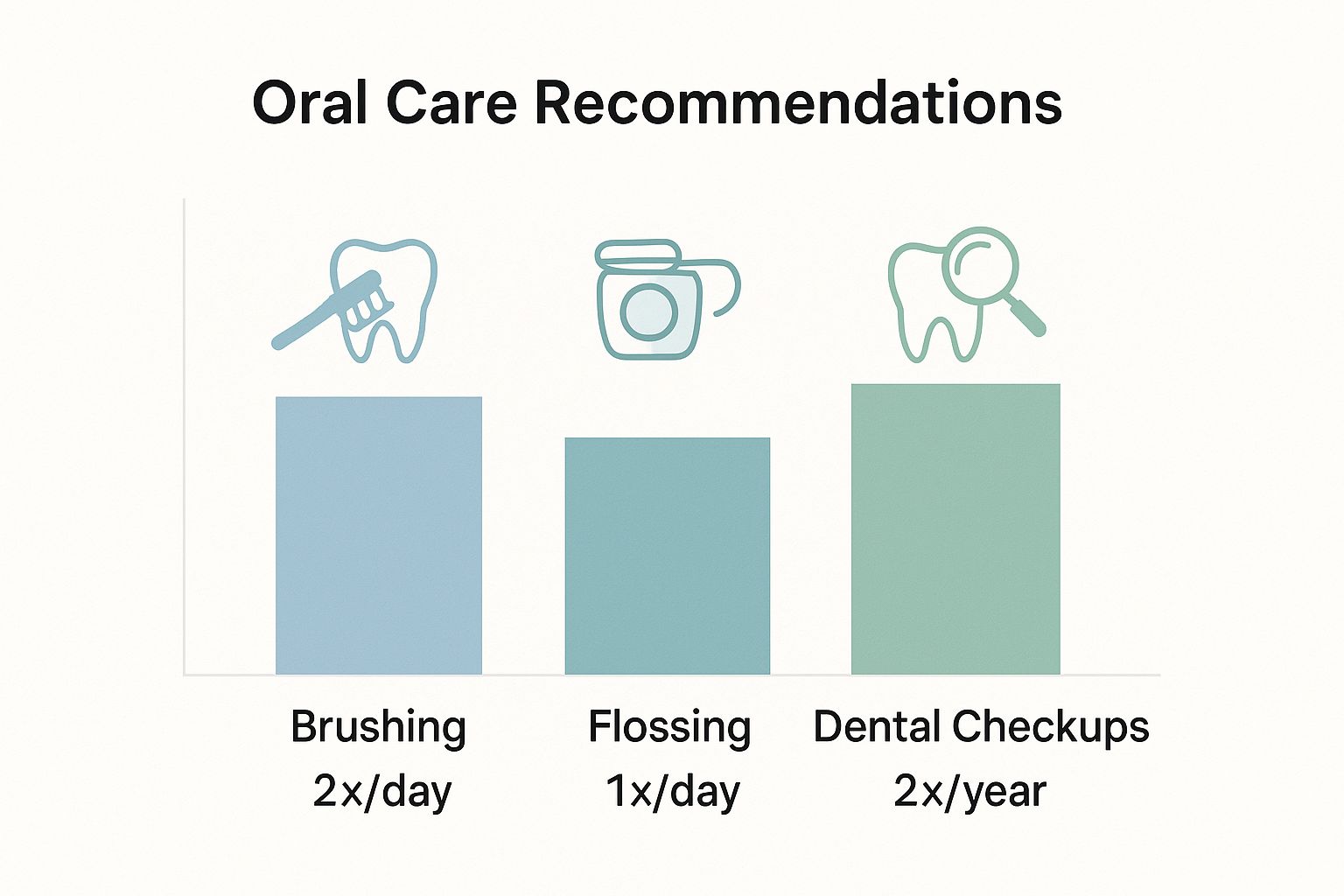
This just reinforces what we all know: consistent daily care—brushing, flossing, and regular checkups—is the only way to protect your investment. If you want to take an even deeper dive into your options, check out our complete guide on https://beyonddentalcare.com/how-to-close-teeth-gap/.
Finally, it’s worth remembering that your smile is just one part of your overall look. For those interested in a more holistic approach to enhancing their facial aesthetics, you might even consider complementary procedures like modern lip filler treatments. By thinking through every factor, you can confidently choose the best way to fix the gaps in your teeth and get a smile you absolutely love to show off.
Protecting Your New Smile for the Long Haul
You’ve invested time, money, and effort to fix the gaps in your teeth, and that’s a huge accomplishment. So, how do you make sure that beautiful result lasts? The focus now shifts from the treatment itself to your daily habits. Long-term success really boils down to how you care for your smile day in and day out, and that plan will look different depending on how you closed your gap.
If you went the orthodontic route with braces or aligners, get ready to meet your new best friend: the retainer. It might feel like a hassle after months of active treatment, but it’s the single most important tool you have. Teeth have a stubborn “memory” and will try to drift back to where they started.
Wearing your retainer exactly as your orthodontist tells you—especially in that first year—is completely non-negotiable. Skipping it for just a few nights is all it takes for small shifts to begin, potentially undoing all the hard work you put in.
Caring for Cosmetic and Restorative Work
Did you choose a cosmetic or restorative fix? Your care routine will be a bit different, but it’s just as vital.
For those with dental bonding or porcelain veneers, top-notch oral hygiene is everything. While the materials themselves can’t get cavities, the natural tooth underneath and the gums around them certainly can. Any plaque buildup along the gumline can cause stains or gum problems, which will definitely spoil the look of your new smile.
- Gentle Brushing: Always use a soft-bristled toothbrush with non-abrasive toothpaste. You want to avoid scratching the beautifully polished surface of your restorations.
- Careful Flossing: Floss every day, but be gentle around the edges where the veneer or bonding meets the tooth. You don’t want to snag or chip it.
- Be Mindful of What You Bite: Try not to bite directly into super hard foods like ice, jawbreakers, or nuts with your treated teeth. It’s an easy way to cause a fracture.
If a dental implant was used to fill your space, keeping the gums around it healthy is your top priority. The health of the implant depends on it. You might need special tools like interdental brushes or a water flosser to clean around the implant post and under the crown—places a normal toothbrush just can’t reach.
Managing Habits to Ensure Longevity
Finally, it’s critical to address any habits that might have caused the gap in the first place. For instance, if you have a tongue thrust—where your tongue pushes against your front teeth when you swallow—it can still put pressure on your newly straightened teeth. A chat with your dentist or an orofacial myologist can give you simple exercises to retrain that reflex.
No matter which treatment you chose, your best insurance policy is sticking to your regular dental check-ups. These visits let your dentist catch tiny problems early, whether it’s a bit of loose bonding or the first signs of teeth shifting. This vigilance is what will keep your gap-free smile looking fantastic for years to come.
Your Questions About Closing Teeth Gaps, Answered
Thinking about fixing a gap in your smile naturally brings up a lot of questions. It’s a big decision! We hear these concerns all the time, so we’ve put together some straightforward answers to help you feel more confident about your next steps.
Will Fixing My Tooth Gap Hurt?
Most people are pleasantly surprised by how comfortable the process is. Simpler procedures like dental bonding are completely painless. If you go the orthodontic route, you might feel some temporary pressure or soreness for a few days after an adjustment, but it’s very manageable.
For more involved treatments like dental implants, we use a local anesthetic to make sure you won’t feel anything during the procedure itself. Any soreness afterward is typically mild and easily handled.
Does Insurance Cover These Treatments?
This is a big one, and the answer really varies. Insurance is much more likely to step in for treatments considered “medically necessary.” Think orthodontics to fix a bad bite or an implant to replace a tooth that’s missing entirely.
Procedures done purely for cosmetic reasons, like veneers, are often not covered. The best first step is always to check the specific benefits of your dental plan.
The key thing to remember is that function often dictates coverage. If that gap is causing bite problems or other oral health issues, insurance is far more likely to help out.
Can the Gap Come Back After Treatment?
It’s possible for teeth to shift, but this is something we can absolutely manage with proper care. If you’ve had orthodontics, consistent retainer use is essential. Seriously, wearing your retainer as directed is the number one thing you can do to prevent your teeth from moving back.
For restorations like bonding or veneers, the best defense is great oral hygiene and avoiding bad habits. Things like biting your nails or chewing on hard objects can damage the work, so protecting your investment will keep your new smile looking perfect.