
So, you have a dental cleaning coming up. Have you ever wondered what really happens during the appointment? A professional cleaning is when a dental hygienist removes all the tough plaque and tartar that have built up on your teeth.
It's one of the easiest and best things you can do to stop cavities and gum disease before they even start.
Your Guide to a Professional Teeth Cleaning
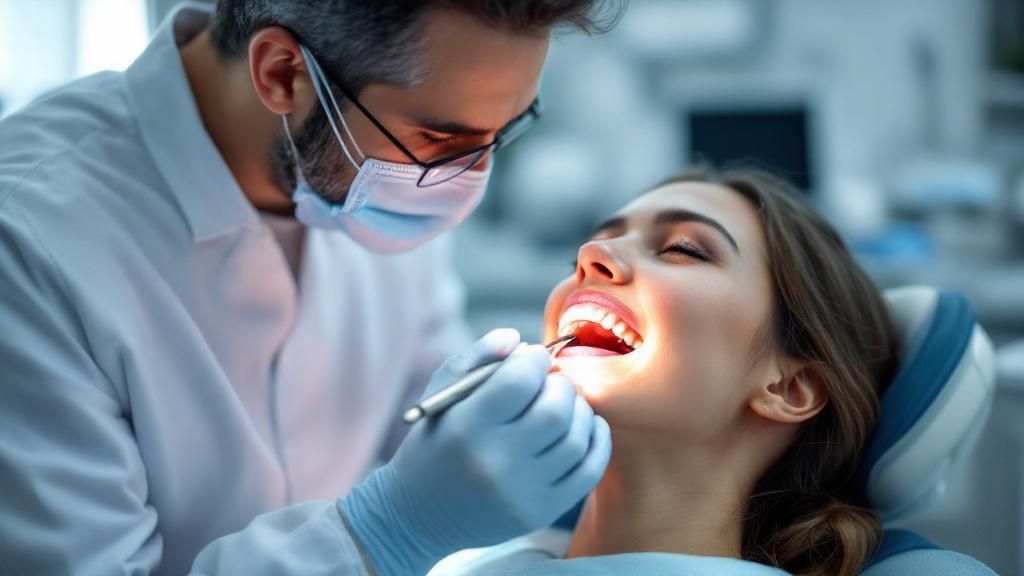
If going to the dentist makes you a little nervous, knowing what to expect can help a lot. Don't think of it as a scary procedure. Instead, see it as a detailed tune-up for your smile. It's meant to keep your mouth healthy and is a big part of your overall wellness.
The main goal is to get rid of the gunk your toothbrush can't handle at home. Plaque is that sticky, fuzzy film of germs that's always trying to live on your teeth. If it stays there too long, it hardens into tartar. Only a dental professional has the right tools to safely remove tartar.
This isn't just about having a pretty smile; it's an important step to stay healthy. Dental diseases affect a huge number of people—3.5 billion around the world. Getting regular cleanings is one of the best ways to avoid being one of them. You can find more interesting dental care facts on PremierImageDentistry.com.
The 5 Key Stages of a Dental Cleaning
To give you a better idea, we can break the appointment down into five main stages. Each one has a specific job, and together they leave your mouth feeling fresh and healthy.
Here is a quick summary of the main steps you'll go through during your teeth cleaning.
| Stage | What Happens | Why It's Important |
|---|---|---|
| 1. The First Check | The hygienist looks around your mouth with a small mirror to check for any clear problems like swelling or cavities. | This helps them plan the cleaning and spot any potential issues early. |
| 2. Scaling | Using special tools, the hygienist gently scrapes plaque and tartar from your teeth and along your gum line. | This is the most important step for preventing gum disease and cavities because it removes the hardened germs. |
| 3. Polishing | A gritty paste and a spinning tool are used to make your teeth smooth and shiny. | Polishing removes stains from the surface and makes it harder for new plaque to stick to your teeth. |
| 4. Flossing | The hygienist flosses between your teeth, getting into spots that might have been missed during scaling. | This cleans out any leftover plaque or polishing paste from between your teeth. |
| 5. Fluoride and Rinsing | A final rinse washes away anything left over. Often, a fluoride treatment is put on to help protect your teeth from cavities. | Fluoride makes your tooth enamel stronger, so it can better fight off acid from germs and sugar. |
After these steps, your hygienist will usually give you some personal tips for taking care of your teeth at home. Then, you're all done until your next visit, with a smile that's not just cleaner but healthier, too.
How to Prepare for Your Dental Visit
Coming to your dental cleaning ready can make a big difference. When you know what to expect and have your information with you, the appointment goes more smoothly and you feel more relaxed. A little prep helps our team focus on giving you the best care.
Before you leave home, it’s a good idea to gently brush and floss your teeth. This isn’t a test! It just cleans away any food from your last meal, which gives your hygienist a clean start. Think of it as a nice thing to do that helps them get right to the important work.
Have Your Information Ready
Your mouth can show a lot about your overall health, so it’s important to keep us updated. We need to know what’s going on with your body to give you safe and effective care.
- Health Updates: Have you been diagnosed with any new health problems since your last visit? Let us know.
- Medicine List: Write down a current list of all medicines, vitamins, and supplements you’re taking, including how much you take.
- Dental Issues: Think about anything new you've noticed with your teeth or gums. Are any teeth sensitive to cold? Are your gums sore? Now is the time to tell us.
Being open with your dental team is the best way to have a comfortable visit. If you feel nervous or know you have sensitive spots, please tell us. We are here to help you feel relaxed and comfortable.
Sharing these details helps us keep you safe and get the best results. If you're scheduled for something more than a cleaning, our guide on how to prepare for oral surgery has some great extra tips. Being prepared is the first step to a calm and positive dental visit.
The Step-by-Step Teeth Cleaning Process
Once you’re in the chair, the cleaning begins. Knowing what’s coming can make a big difference and help you feel more confident. Each step in a professional cleaning has a purpose. They all work together to leave your mouth much healthier than when you came in.
It all starts with a quick but important check. Your dental hygienist will use a small mirror to gently look at your teeth and gums. They're looking for any obvious problems, like swelling or possible cavities, that might need extra attention.
Scaling Away Plaque and Tartar
Next is the most important part of the whole process: scaling. This is when your hygienist removes the built-up plaque and tartar from your teeth, especially along the gumline. Plaque is a soft, sticky film of germs. If it’s not removed, it hardens into tartar, which can only be safely taken off with professional tools.
Your hygienist will probably use a couple of different tools for this:
- An ultrasonic scaler: This tool uses gentle vibrations and a cool spray of water to break up bigger pieces of tartar. You’ll hear a humming sound and feel a light vibration and mist, which is all normal.
- Hand scalers: For smaller spots, the hygienist will use special hand tools to carefully scrape away any leftover tartar.
This image shows a hygienist in the final stages of a cleaning, polishing the teeth to a beautiful shine.
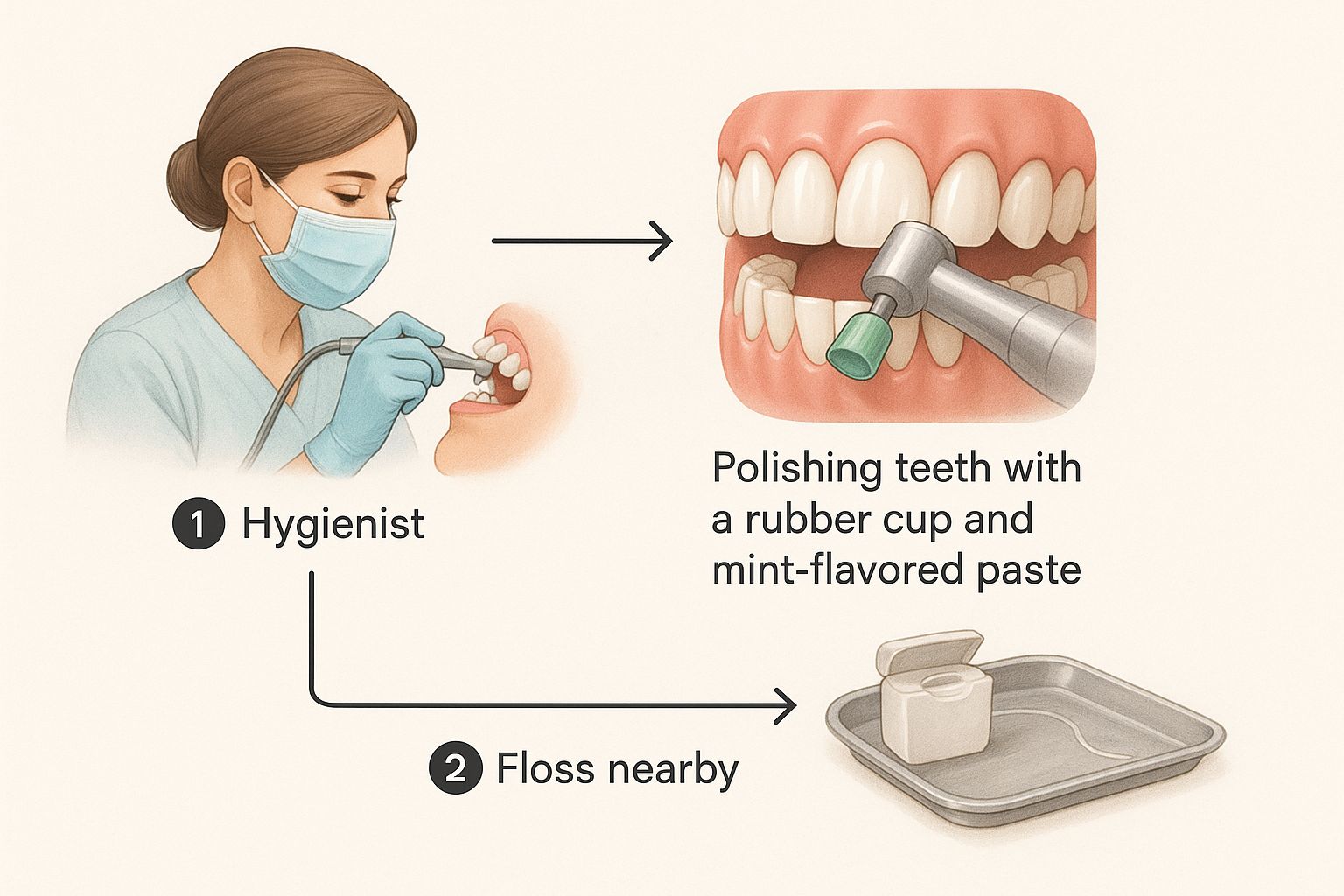
This shows the careful, professional touch that makes your smile not just clean, but truly healthy. The mix of modern tools and expert skill is what makes a professional cleaning so effective. The technology for these tools is always improving. The market for dental cleaning tools is expected to grow to $8.1 billion by 2035. This shows a real effort to make cleanings better and more comfortable for everyone.
The Final Polish and Floss
After the scaling is done, your teeth are ready for a good polish. Your hygienist will use a slow-speed tool with a soft rubber cup and a special, slightly gritty paste. This step is great for removing any stains on the surface, leaving your teeth feeling smooth and shiny. That smoothness also makes it harder for new plaque to stick.
The goal of a professional cleaning isn’t just to make your teeth look good. It’s to remove harmful germs that you can’t get rid of at home. This helps you have better long-term mouth health.
To finish, your hygienist will floss your teeth for you. They'll carefully clean between each tooth, reaching deep along the gumline to clear out any leftover paste or plaque. The last step is a rinse to wash everything away. That’s it for the main cleaning! For more information, check out our detailed guide on what happens at a dental cleaning.
Protecting Your Smile with Fluoride and Sealants
Once your teeth are sparkling clean, we might suggest an extra layer of protection. Think of it like adding a protective wax coat after a car wash. It’s a simple, painless step that helps protect against future problems and gives you more peace of mind between visits.
One of the most common options is a professional fluoride treatment. This isn't the same fluoride you get from toothpaste; it's a much stronger formula. Your hygienist will apply a gel, foam, or varnish right onto your teeth. It works like a vitamin boost for your tooth enamel, making it stronger.
Dental Sealants: Your Secret Weapon Against Cavities
Another great option, especially for the deep grooves in your back teeth, is dental sealants. We simply paint a thin, plastic coating onto the chewing surfaces of your molars. This sealant flows into all the tiny cracks where food and germs like to hide. It creates a smooth surface that’s much easier to keep clean.
Sealants block out plaque and food. Studies show they reduce the risk of cavities in back teeth by nearly 80%. It’s a quick step that can save you from problems later on.
This procedure seals off the areas of your teeth most likely to get cavities, making them much safer from decay. To see if this is a good choice for you, you can learn more about dental sealants in Glendale, AZ and how they can protect your smile. These treatments are a smart way to invest in your long-term dental health.
Keeping Your Smile Bright After Your Cleaning
There's nothing like that super-clean, smooth feeling after you leave the dentist's office. To make that fresh feeling last, it helps to know how to care for your smile in the hours and days after. Your teeth and gums just had a deep clean, so a little extra care will go a long way.
Right after your appointment, especially if you had a fluoride treatment, you should wait at least 30 minutes before eating or drinking. This gives the fluoride time to soak in and strengthen your teeth. For the next few hours, it's a good idea to stick to soft foods that won't stain your teeth. Try to avoid anything too acidic, hot, or cold.
What to Do for a Little Sensitivity
It's completely normal to feel a little soreness in your gums or have some tooth sensitivity after a cleaning. This happens because your hygienist worked hard to remove tartar from tricky spots along your gumline. The good news is that this feeling is temporary and usually goes away in a day or two.
To stay comfortable, you can:
- Use a soft-bristled toothbrush and brush gently.
- Rinse with warm salt water to soothe your gums.
- Avoid very hot or cold foods and drinks for a day.
Think of your professional cleaning as a fresh start for your oral health. The goal now is to build on that with a great daily routine until your next visit.
Keeping that just-cleaned feeling is all about being consistent. Your best defense against plaque is a solid at-home routine. To figure out the right time for your next appointment, check out our guide on how often you should get a dental cleaning. And if you're thinking about making your smile even brighter, an expert guide to teeth whitening for sensitive teeth can offer great tips.
Still Have Questions About Teeth Cleaning?
We understand. Even after reading all this, it's normal to still have a few questions. Feeling confident about your appointment comes from knowing what to expect, so let's answer some common questions.
Our goal is to answer the questions we hear most often from patients. We want you to feel informed about your dental care, which can help turn any worry into peace of mind.
Does a Professional Teeth Cleaning Hurt?
For most people, a routine teeth cleaning is a painless experience. You'll feel some new things—like the light vibrations from the scaler or the gentle pressure from the hand tools—but it shouldn't be painful.
However, if your gums are swollen, you have a lot of tartar, or your teeth are naturally sensitive, you might feel some discomfort. The most important thing is to speak up! If anything feels sharp or uncomfortable, let your hygienist know. They can use a numbing gel or change what they're doing to make sure you're comfortable.
Why Do I Need a Professional Cleaning If I Brush and Floss?
Even if you are great at brushing and flossing at home, it's nearly impossible to remove all the plaque. Over time, this sticky film of germs hardens into tartar. Tartar is a tough, hard substance that your toothbrush cannot remove.
Only a dental professional with special tools can safely remove tartar from your teeth and below the gumline. This is the main reason professional cleanings are so important for preventing cavities and gum disease.
Also, these appointments are a chance for your dental team to spot early signs of problems you wouldn’t be able to see or feel yourself. There are many other good reasons to stay on schedule, and you can learn about the key advantages of routine dental cleanings in our other article.
How Often Should I Get My Teeth Cleaned?
The usual recommendation that works well for most people is to schedule a professional cleaning every six months. This timing is usually perfect for keeping plaque and tartar under control and for catching small problems before they become big ones.
But your dentist might suggest a different schedule based on your own dental health. For example:
- More Often: If you have had gum disease or tend to get tartar quickly, your dentist might want to see you every three or four months.
- Less Often: In rare cases, someone with great dental health and a low risk for problems might be fine with a longer time between cleanings.
Can a Cleaning Damage My Tooth Enamel?
No, not at all. When done by a trained professional, a teeth cleaning is completely safe and does not harm your tooth enamel. Enamel is the hardest substance in the human body, and the tools we use are made to remove tartar without hurting the tooth itself.
The sounds from the scaler might seem a bit loud, but the whole process is very careful and controlled. In fact, a professional cleaning does the opposite of causing damage—it protects your enamel by removing the harmful germs and acids that cause cavities. It's one of the best things you can do for the long-term health of your smile.
At Beyond Dental Care, we believe that when patients know more, they are healthier. If you have any more questions or are ready to see our patient-first approach to dental care in Glendale, AZ, we invite you to schedule your next appointment with us. Visit us at https://beyonddentalcare.com to get started.