
We’ve all heard it from our dentist: “You need to floss more!” For many people, wrapping string around our fingers every day feels like a chore. It can be awkward, hurt sensitive gums, and be almost impossible if you have braces or dental implants.
What if there was a better way to clean between your teeth? The truth is, cleaning those tight spaces is very important for preventing cavities and gum disease. But regular string floss isn't the only tool for the job. Finding a good alternative to flossing can make a big difference in your daily routine and your oral health.
This guide will show you six good options that aren't string floss. We'll explain how each one works, who it’s best for, and give you tips to find the perfect fit for you. From high-tech water flossers to simple dental picks, your journey to a healthier smile starts here. We'll help you find a method you'll actually use, making your next dental checkup a much better experience.
1. Water Flossers (Oral Irrigators)
If you find regular string floss hard or painful to use, a water flosser is a great alternative to flossing. It is both effective and comfortable. Also called an oral irrigator, this electronic device uses a stream of water to wash away food, bacteria, and plaque from between your teeth and under your gums. Because it can clean hard-to-reach areas, it’s a popular choice for people with braces, dental implants, or crowns.
The gentle but strong stream of water is less harsh on sensitive gums than string floss. It often helps reduce bleeding and swelling. This makes it a top choice in many dental offices for patients with gum problems like gingivitis.
Who Should Use a Water Flosser?
Water flossers are useful for almost anyone, but they are extra helpful for certain needs:
- People with Braces: The water stream easily cleans around brackets and wires where string floss can get stuck.
- People with Dental Work: It cleans around implants and bridges without messing them up.
- People with Trouble Using Their Hands: Older adults or those with arthritis often find the wand easier to hold and use than string floss.
- Anyone with Sensitive Gums: You can change the water pressure to find a level that cleans well without causing pain.
This chart shows some key facts about how well water flossers work.
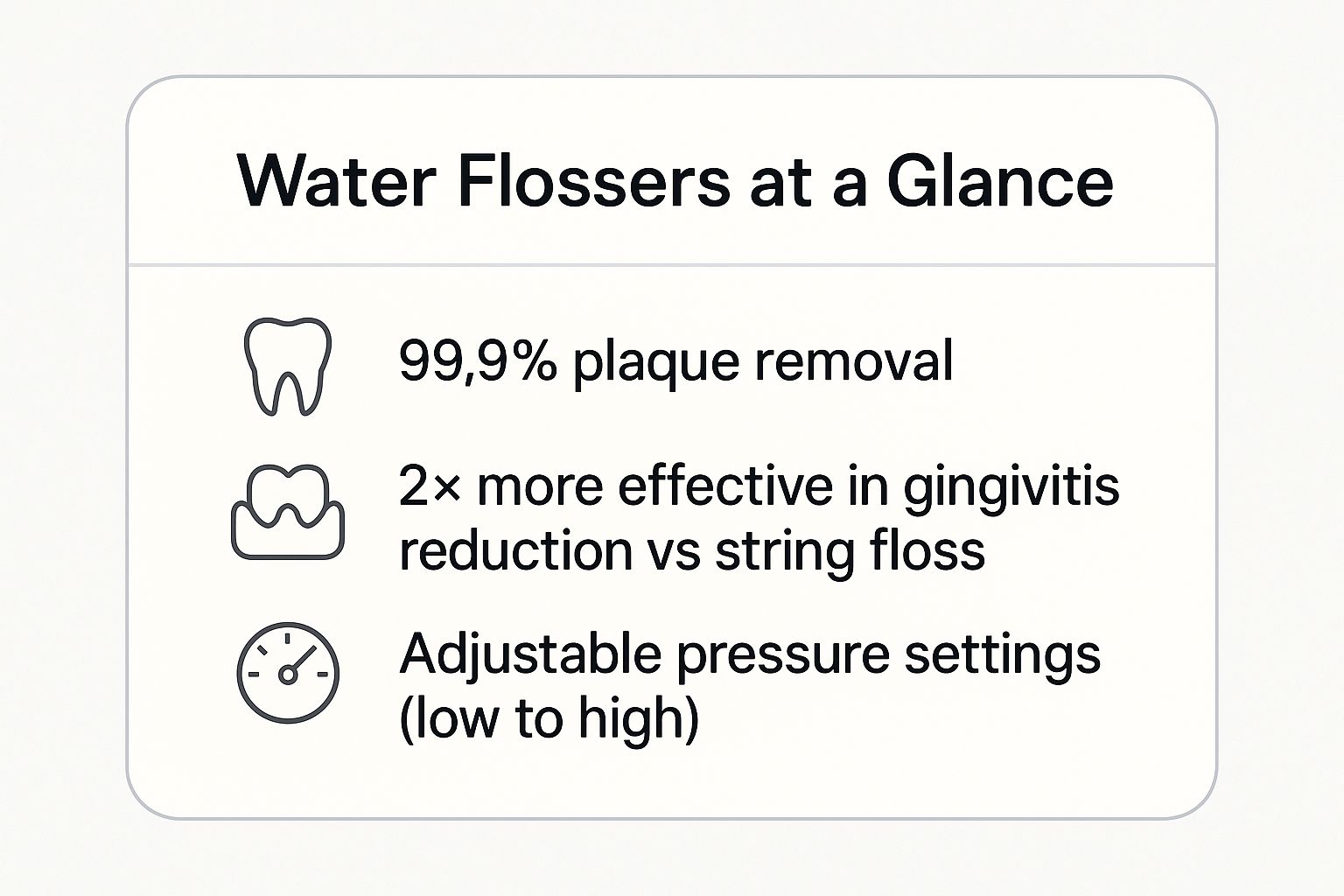
The data shows that water flossers are not just an easy option. They are a proven tool for making gums healthier and removing more plaque than old-fashioned methods for many people.
How to Use a Water Flosser Correctly
To get the best results and not make a mess, follow these simple steps:
- Fill the Tank: Use warm water for comfort, especially if you have sensitive teeth.
- Pick a Tip and Pressure: Start with the lowest pressure setting. You can slowly turn up the pressure as your gums get used to it.
- Lean Over the Sink: Put the tip in your mouth, then turn the device on. Close your lips just enough to stop splashing but let the water drain into the sink.
- Aim and Glide: Point the stream at your gumline at a 90-degree angle. Pause for a moment between each tooth, moving the tip along your gums to clean the front and back of your teeth.
Using a water flosser regularly is a great way to improve your oral hygiene. To learn more ways to take care of your teeth, you can improve your smile at beyonddentalcare.com.
2. Interdental Brushes
For those with gaps between their teeth, braces, or dental implants, interdental brushes are a very good alternative to flossing. They often clean better than string floss. These are tiny brushes made to fit in the spaces between your teeth, cleaning spots that floss can miss. They use a gentle scrubbing action to remove plaque and food with great accuracy.
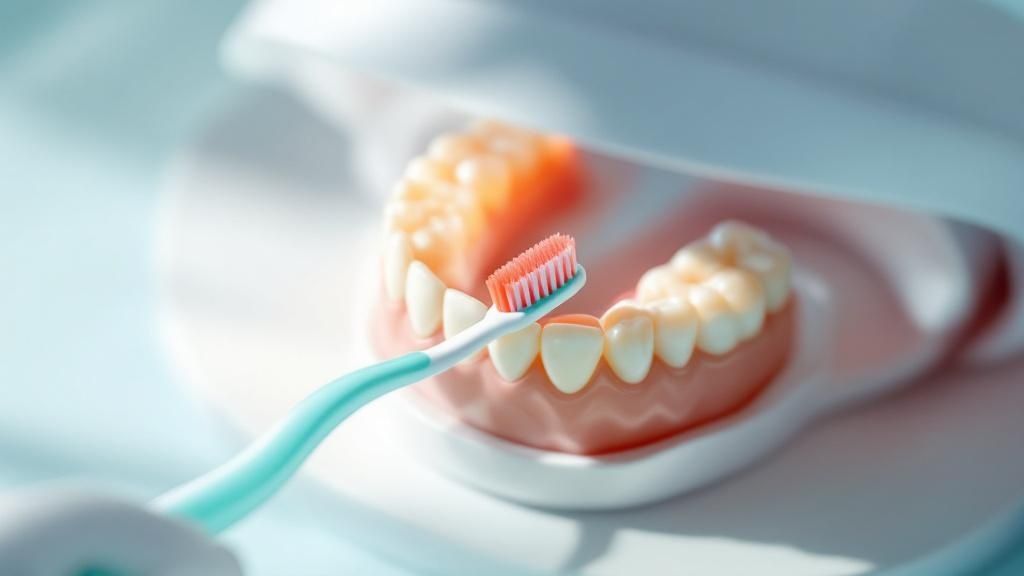
Dental hygienists often recommend these brushes because they are so good at breaking up plaque. They are a key tool for keeping your mouth healthy, especially in areas where teeth are not perfectly close together.
Who Should Use Interdental Brushes?
Anyone can use them, but these brushes are especially helpful for people with specific dental needs:
- People with Braces: The brushes easily get around wires and brackets to clean areas that are almost impossible to reach with string floss.
- People with Dental Implants or Bridges: They clean the sides of implants and under bridges, where plaque often builds up.
- People with Gum Disease: For those with receding gums or larger gaps between teeth, these brushes clean more completely than floss.
- Anyone Who Has Trouble with Their Hands: The small handle is often easier to grip and control than a thin piece of string floss.
These tools are so effective that they are often used for taking care of dental implants and treating gum disease. They are not just a simple substitute; they are a better cleaning tool for many situations.
How to Use Interdental Brushes Correctly
Using the right technique is important for a safe and good clean. Follow these simple steps for the best results:
- Choose the Right Size: The size is very important. Ask your dentist to help you find the right size for your teeth. The brush should fit snugly but you shouldn't have to force it.
- Insert Gently: Carefully place the brush between your teeth at the gumline. Do not force it into a space that is too tight.
- Clean with a Gentle Motion: Move the brush back and forth a few times in each space. A side-to-side scrubbing motion is best.
- Rinse and Repeat: Rinse the brush with water after cleaning each space to wash off plaque before you move to the next one.
- Replace When Worn: Replace the brush when the bristles look worn out or the wire is bent, usually after a few days.
Adding interdental brushes to your daily routine is a simple but powerful step. For more helpful ideas, check out these other oral hygiene tips at beyonddentalcare.com.
3. Oil Pulling
For those who want a more natural way to clean their mouth, oil pulling is an old alternative to flossing. This practice comes from ancient India and involves swishing an edible oil, like coconut oil, in your mouth for several minutes. The idea is that the fat in the oil "pulls" bacteria from between the teeth and gums. This can help reduce plaque and improve your overall oral health.
While it's not a direct replacement for cleaning with a tool, many people use it with their regular routine. They find it helps with swollen gums and freshens their breath. Because it's so gentle, it's a good choice for people with very sensitive gums who find even the softest floss painful.
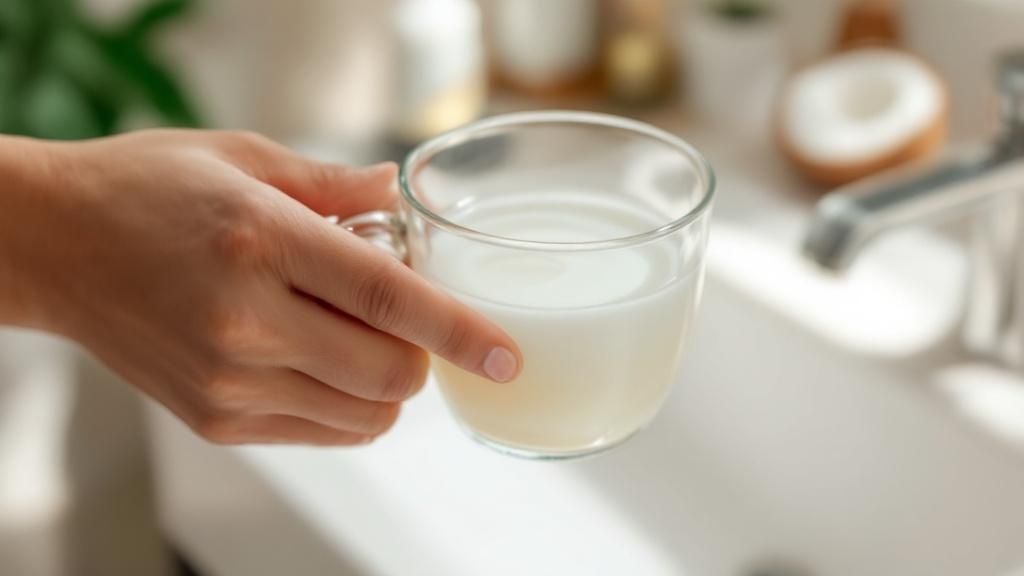
Who Should Try Oil Pulling?
Oil pulling can be a good addition for anyone interested in natural oral care, but it has specific benefits for certain people:
- People with Swollen Gums: The anti-inflammatory effects of oils like coconut oil may help soothe sore gums and reduce bleeding.
- People Looking for a Natural Mouthwash: It’s a chemical-free way to help control the bacteria that cause bad breath.
- Those with a Lot of Plaque: Some people believe it helps loosen plaque and food, which makes brushing more effective.
- Health-Focused Individuals: It fits well with a lifestyle that focuses on natural and traditional health practices.
Modern science is still studying oil pulling, but its long history shows that many people have found it helpful for oral health.
How to Do Oil Pulling Correctly
To get the most out of oil pulling, follow these simple steps:
- Measure the Oil: Put one to two teaspoons of a good quality oil (like coconut oil) in your mouth.
- Swish Gently: Slowly swish the oil around your mouth, pulling it between your teeth. Try not to swallow it. Start with 5 minutes and work your way up to 15-20 minutes.
- Spit it Out the Right Way: When you’re done, spit the oil into a trash can, not the sink. The oil can harden and clog your pipes.
- Rinse Your Mouth: Rinse your mouth with warm salt water to get rid of any leftover oil.
- Brush Afterwards: Always brush your teeth after oil pulling. It is meant to be done along with brushing, not instead of it.
Oil pulling is a unique way to improve your dental routine. Just like diet is important for oral health, practices like this can help too. You can learn more about foods good for your gums at beyonddentalcare.com.
4. Antimicrobial Mouthwash with Targeted Swishing
While cleaning with tools is important, a strong mouthwash can be a good alternative to flossing, especially for people with certain health issues. An antimicrobial mouthwash, when used with a special swishing method, works by killing the harmful bacteria that cause plaque and gum disease. This is a good way to clean the tiny spaces between teeth where bacteria grow.
Unlike regular mouthwashes that just freshen your breath, these contain active ingredients that kill bacteria. This helps control plaque and reduce gum swelling. For this reason, dentists often recommend them for a short time to help with serious mouth problems or to help patients who can't clean between their teeth very well.
Who Should Use Antimicrobial Mouthwash?
This method isn't for everyone all the time, but it offers big benefits in certain situations:
- After Dental Surgery: After a tooth is pulled or you have gum surgery, your mouth is too sore for flossing. A special rinse helps keep the area clean and prevents infection.
- People with Bad Gingivitis: When gums are very swollen and bleed easily, this mouthwash can lower the amount of bacteria and calm the gums. To get started, you can learn how to reverse gingivitis at home with beyonddentalcare.com.
- People with Limited Movement: For those who have trouble using their hands, this method provides a good way to keep their mouth clean.
- High-Risk Patients: People who get a lot of plaque or have gum disease may use it as part of a plan supervised by their dentist.
How to Use Antimicrobial Mouthwash Correctly
To get the best results and clean between your teeth, use this special technique:
- Brush First: Always brush your teeth before using the mouthwash. This removes most of the plaque, letting the rinse work better on the bacteria left behind.
- Use the Right Amount: Measure the amount shown on the bottle. Using too much or too little can make it less effective.
- Swish with Force: Don't just gently swish. Forcefully push and pull the liquid between your teeth for the full time, usually 30 to 60 seconds. This helps the mouthwash get into the spaces between teeth.
- Don't Rinse, Eat, or Drink: After you spit, do not rinse with water, eat, or drink anything for at least 30 minutes. This lets the active ingredients stay on your teeth and keep working.
- Talk to Your Dentist: Strong mouthwashes are not meant for long-term daily use without a dentist's advice, as they can sometimes stain teeth. Always follow your dentist's instructions.
5. Soft-Pick Dental Picks
For those looking for a simple and gentle alternative to flossing, soft-pick dental picks are a modern version of the toothpick. These flexible tools have soft, rubbery bristles that slide easily between teeth. They remove food and plaque while gently massaging the gums. This makes them a great choice for cleaning on the go or for people with sensitive gums.
Unlike wooden toothpicks that can break or hurt your gums, soft picks are made to be safe and comfortable. Their cone shape helps them fit into both small and wider spaces between teeth. Because they are easy to use and carry, they are perfect for travel or for a quick cleanup after meals.
Who Should Use a Soft-Pick Dental Pick?
Soft picks are very easy for anyone to use, but they are especially helpful in certain situations:
- People with Braces or Dental Work: The flexible bristles can easily clean around brackets, wires, and implants without getting stuck.
- People with Sensitive Gums: The soft tips massage the gums, which can help improve blood flow and reduce swelling without causing pain.
- Anyone Needing On-the-Go Cleaning: Their small size makes them perfect to carry in a purse or pocket to remove food after a meal.
- Those with Trouble Using Their Hands: The handle is thicker and easier to grip than a thin piece of string floss.
Their simple design and good cleaning power make them a handy addition to any oral hygiene routine, especially when you are away from home.
How to Use a Soft-Pick Dental Pick Correctly
Using a soft pick is easy, but follow these steps to make sure you get a safe and effective clean:
- Choose the Right Size: Soft picks come in different sizes. Pick one that fits between your teeth without having to force it.
- Use a Gentle Motion: Carefully guide the pick between your teeth. Use a gentle in-and-out motion to remove food and plaque. Do not snap the pick into tight spaces.
- Clean Along the Gumline: Angle the pick slightly to clean where the tooth and gum meet. Move it along the gumline of each tooth.
- Rinse and Repeat: You can rinse the pick and use it to clean different spaces in your mouth. Throw the pick away when the bristles get bent.
Using soft picks regularly, especially after eating, is a great way to keep your mouth healthy between brushings.
6. Electric Toothbrushes with Interdental Action
While they don't completely replace cleaning between teeth, modern electric toothbrushes are much better than manual ones. They can be a powerful alternative to flossing. These advanced toothbrushes have special brush heads and cleaning modes designed to clean the spaces between your teeth. They use fast vibrations or movements to create an action that breaks up plaque far beyond where the bristles can touch.
This "interdental action" helps wash out food and plaque from between teeth and along the gumline. These are areas a regular toothbrush often misses. For those who find flossing hard, a good electric toothbrush can greatly improve cleaning between teeth and make gums healthier.
Who Should Use Interdental Electric Toothbrushes?
These toothbrushes are a great choice for almost everyone, but they are extra helpful for certain people:
- Patients with Gum Disease: The deep-cleaning action is key for managing plaque below the gumline and controlling gum disease.
- People with Tightly Spaced Teeth: The strong vibrations can reach into narrow gaps where floss might be hard to use.
- Anyone Wanting an Easier Routine: It provides a better clean with less work, making it great for those who don't like flossing.
- Tech-Friendly Users: Many models have smart features like pressure sensors and timers to help you brush better.
How to Use an Electric Toothbrush Correctly for Interdental Cleaning
To get the most out of your electric toothbrush, focus on your technique:
- Choose the Right Mode: If your brush has a "deep clean" mode, choose it for the best speed and motion.
- Angle the Bristles: Hold the brush at a 45-degree angle toward your gums. This helps the bristles sweep into the small space between the tooth and gum.
- Let the Brush Do the Work: Don't scrub. Gently guide the brush from tooth to tooth, pausing for a few seconds on each one.
- Complete the Full Time: Brush for the two minutes that dentists recommend to make sure you've cleaned all of your teeth well.
- Add Another Tool if Needed: While these brushes are good, they work best when used with another tool like a water flosser or interdental picks to remove all plaque.
Using an electric toothbrush is a key part of modern oral care. It helps keep your teeth and gums healthy for life. To learn more about how tools like this fit into a full health plan, see what preventive dentistry is at beyonddentalcare.com.
6 Alternatives to Flossing Comparison
| Item | 🔄 How Hard to Use? | 🛠️ What You Need | 📊 What to Expect | 💡 Best For | ⭐ Key Benefits |
|---|---|---|---|---|---|
| Water Flossers (Oral Irrigators) | Medium: need to set up and clean | Electricity, water, cost ($30-$200) | High: removes 99.9% of plaque, helps gums more than floss | Trouble using hands, braces, gum problems | Gentle on gums, adjustable pressure, deep cleaning |
| Interdental Brushes | Low: easy to use, need right size | Brush heads (replaceable), low cost | High: better than floss for cleaning larger gaps | Gaps between teeth, implants, bridges | Easy to use with one hand, reusable, good for implants |
| Oil Pulling | Low: simple swishing | Natural oils (low cost), time (10-20 min) | Medium: may reduce bacteria and help gums | Natural or chemical-free routines | Chemical-free, low cost, may whiten teeth |
| Antimicrobial Mouthwash | Low: just rinse, no tools | Mouthwash cost | Medium-High: reduces gum problems and plaque | After surgery, bad gingivitis, can't use hands well | Easy to use, reaches all areas, kills a lot of bacteria |
| Soft-Pick Dental Picks | Low: easy to use | Low cost, need to replace often | Medium: removes plaque well, feels good on gums | Sensitive teeth, travel, easy cleaning | Comfortable, easy to carry, gentle on gums |
| Electric Toothbrushes with Interdental Action | High: need to buy, charge, and clean | Electric device, replacement heads ($100-$300+) | High: removes much more plaque than a manual brush | Full daily care, high-risk patients | Removes plaque better, has smart features, different modes |
Creating Your Perfect Oral Hygiene Routine
Figuring out the best way to care for your teeth can seem hard, but finding the right tools for your smile doesn't have to be. We've looked at several good options beyond string floss to help you find a method that fits your needs. From the powerful cleaning of water flossers to the precise work of interdental brushes, the goal is always the same: get rid of plaque, protect your gums, and keep the spaces between your teeth clean.
The most important thing to remember is that the "best" alternative to flossing is the one you will use correctly every single day. What works great for someone with wide gaps between their teeth might not be right for someone with tight teeth or sensitive gums. Your journey to good oral health is personal. You need to find a routine that feels comfortable, effective, and easy to stick with.
Key Ideas for Building Your Routine
Remember that each tool has its own strengths.
- Water Flossers are great for people with braces, implants, or sensitive gums. They offer a gentle but deep clean.
- Interdental Brushes give you a scrubbing action that is perfect for removing stubborn plaque from wider gaps.
- Soft-Picks are an easy, on-the-go solution that is less scary than floss and gentler than wooden picks.
- Oil Pulling and Antimicrobial Mouthwash are strong additions to your cleaning routine. They help reduce harmful bacteria and freshen your breath.
Think of these tools as partners for your toothbrush, not replacements. Brushing cleans the main surfaces of your teeth, but only cleaning between them can reach the 40% of your tooth surfaces that a toothbrush misses. Combining good brushing with a daily between-the-teeth cleaner is the plan for a truly healthy mouth.
Your Next Steps
So, what should you do now? The first step is to think about your own needs.
- Look at Your Smile: Do you have tight teeth, braces, dental bridges, or sensitive gums? Your answer will help you pick the right tool.
- Try a Few Options: Don't be afraid to try more than one. You might find that a water flosser works best at night, while soft-picks are perfect for a quick clean after lunch.
- Learn the Right Way: Whichever tool you choose, learn how to use it correctly. Using it the wrong way won't work well and could even hurt your gums.
- Ask a Professional: The best thing you can do is talk about your routine with a dental professional.
In the end, taking care of your mouth is an investment in your overall health. A clean mouth lowers your risk for cavities, gum disease, and even other health problems linked to oral bacteria. By choosing a flossing alternative that you like to use, you are taking control of your health and helping yourself keep a bright, confident smile for years to come.
Finding the perfect alternative to flossing is easier with expert help. The team at Beyond Dental Care in Glendale, AZ, can create a personal oral health plan just for you. Schedule a visit at Beyond Dental Care today, and let us help you build a routine that keeps your smile healthy and bright for a lifetime.